A Planetary Crossroad: Accelerating Climate Disruption Clashes With Policy Retrenchment and Tech Demands
Record atmospheric greenhouse gases and mounting ecological disruptions are meeting intensified legal battles over environmental deregulation and surging power demands from emerging digital infrastructure.

Record Emissions and Mounting Ecological Pressures
International environmental monitors and scientific agencies are confronting a grim reality: atmospheric concentrations of carbon dioxide and other primary greenhouse gases have surged to unprecedented heights, accelerating global warming trends and locking in long-term environmental consequences. From severe inundations throughout the Himalayan river basins to prolonged heatwaves across continental Europe, recent seasons have delivered sustained disruptions to human communities and natural habitats alike. At recent global forums, multilateral bodies have reiterated the urgency of formalizing clear timelines to curtail fossil fuel reliance, even as analysts warn that traditional emissions boundaries are slipping away faster than mitigating interventions can be enacted.
These compounding stresses are reshaping aquatic and terrestrial ecosystems in visible ways. Marine researchers have pointed to widespread reef distress caused by rising sea temperatures and acidification, spurring targeted experiments to determine whether close-quarter biological grafting and microbial transfers can stimulate regeneration in fading coral populations. Concurrently, agricultural regions situated in low-lying deltas—such as Southeast Asia’s Mekong corridor—are confronting intensifying saltwater intrusion linked to fluctuating water tables and coastal sea-level rise. Farmers and agronomists are turning to experimental saline-tolerant crops and brackish aquaculture methods out of necessity, reflecting how adaptation is increasingly forced onto the frontline of climate disruption.
The Legal and Regulatory Battlefield
While international scientific panels urge swift decarbonization, major economies are grappling with severe administrative and judicial friction over environmental governance. In the United States, federal environmental policy has become the center of aggressive litigation. Coalitions of public health organizations, municipal advocates, and legal non-profits have filed lawsuits against the Environmental Protection Agency over recent rollbacks targeting greenhouse gas standards for power plants. Advocates assert that loosening constraints on carbon-intensive energy infrastructure undermines public health, compounds toxic particulate pollution, and conflicts with clean air statutes established by decades of precedent.
The courtroom clashes extend into the distribution of federal climate mitigation funds. Federal judges have intervened to require administrative agencies to proceed with congressionally mandated programs, notably halting attempts to freeze billions of dollars allocated for community-level environmental justice and localized air quality monitoring. Municipal stakeholders in industrialized corridors emphasize that delays in deploying monitoring infrastructure leave vulnerable communities exposed to unmonitored particulate spikes. Across the board, legal scholars emphasize that administrative repeals are encountering significant judicial resistance, creating uncertainty for utilities and regulators attempting to plan long-term energy portfolios.
The Digital Grid Dilemma
Compounding the regulatory friction is the rapid transformation of the electrical power sector, driven by surging computational demands. The swift expansion of artificial intelligence clusters, cloud infrastructure, and hyperscale data centers has upended energy projections across North America and Europe. Utility providers that were actively decommissioning older thermal assets are now confronting sharp spikes in baseload demand, prompting intense debates regarding whether to extend the lifespan of legacy natural gas and coal facilities.
To mitigate grid strain without relying entirely on carbon-heavy standby power, major technology conglomerates are increasingly experimenting with alternative grid management frameworks. These strategies include funding virtual power plants and paying industrial consumers to curtail consumption during periods of peak load. Yet energy analysts caution that demand-side flexibility alone cannot offset the massive volume of new generation required. Local regulatory commissions are facing pushback from consumer protection groups and environmental organizations over who will bear the financial and environmental costs of expanding distribution lines and power plants to serve private data hubs.
Conservation Impasses and Adaptation Realities
Across the Atlantic, comprehensive assessments from the European Environment Agency and UK bodies highlight that even where renewable energy deployment and air quality have seen substantial multi-year gains, structural hurdles remain. Decarbonizing heavy transport, modernizing agricultural emissions, and meeting woodland restoration targets continue to lag behind policy mandates. Furthermore, biodiversity preservation is struggling against the combined pressures of habitat fragmentation, invasive species, and shifting seasonal baselines.
As international negotiators prepare for upcoming conservation and climate summits, the divergence between physical reality and political inertia remains the core challenge. The global discourse is shifting from theoretical timelines to high-stakes triage: defending foundational environmental protections in court, engineering adaptive responses for strained food systems, and reconciling clean energy transitions with soaring modern electricity demands. The outcomes of these interconnected battles will dictate whether the trajectory toward escalating ecological disruption can be stabilized.
Recommended for you
Similar to “Environment”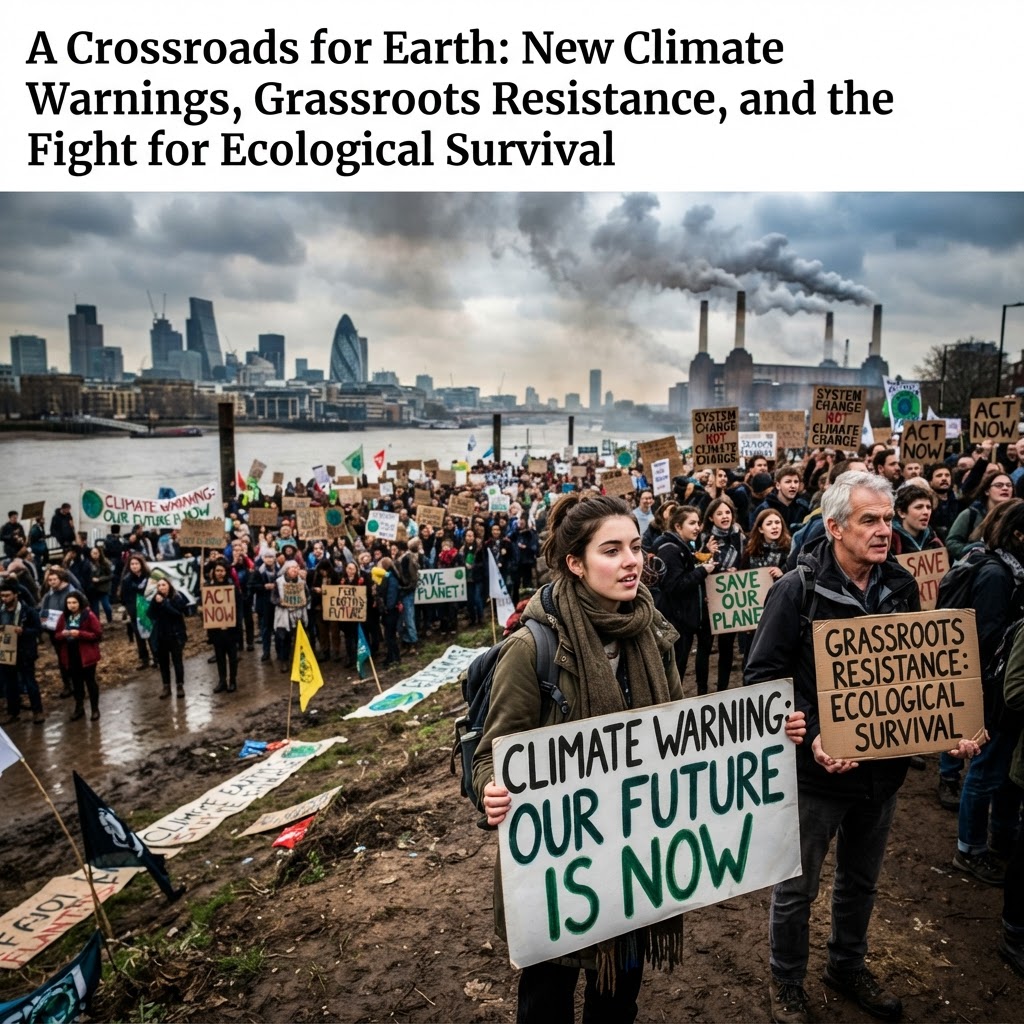
A Crossroads for Earth: New Climate Warnings, Grassroots Resistance, and the Fight for Ecological Survival
Recent scientific studies warn of accelerating atmospheric hazards and unprecedented heatwaves, while legal battles and Indigenous leadership redefine global environmental governance.

A Planetary Crossroad: Global Biodiversity Talks Collide With Escalating Climate Signals
As international delegates chart the new 'Yerevan Pathway' to rescue lagging 2030 biodiversity goals, newly released data highlighting record greenhouse gas concentrations and shifting marine currents underscore the mounting urgency of coordinated ecological action.
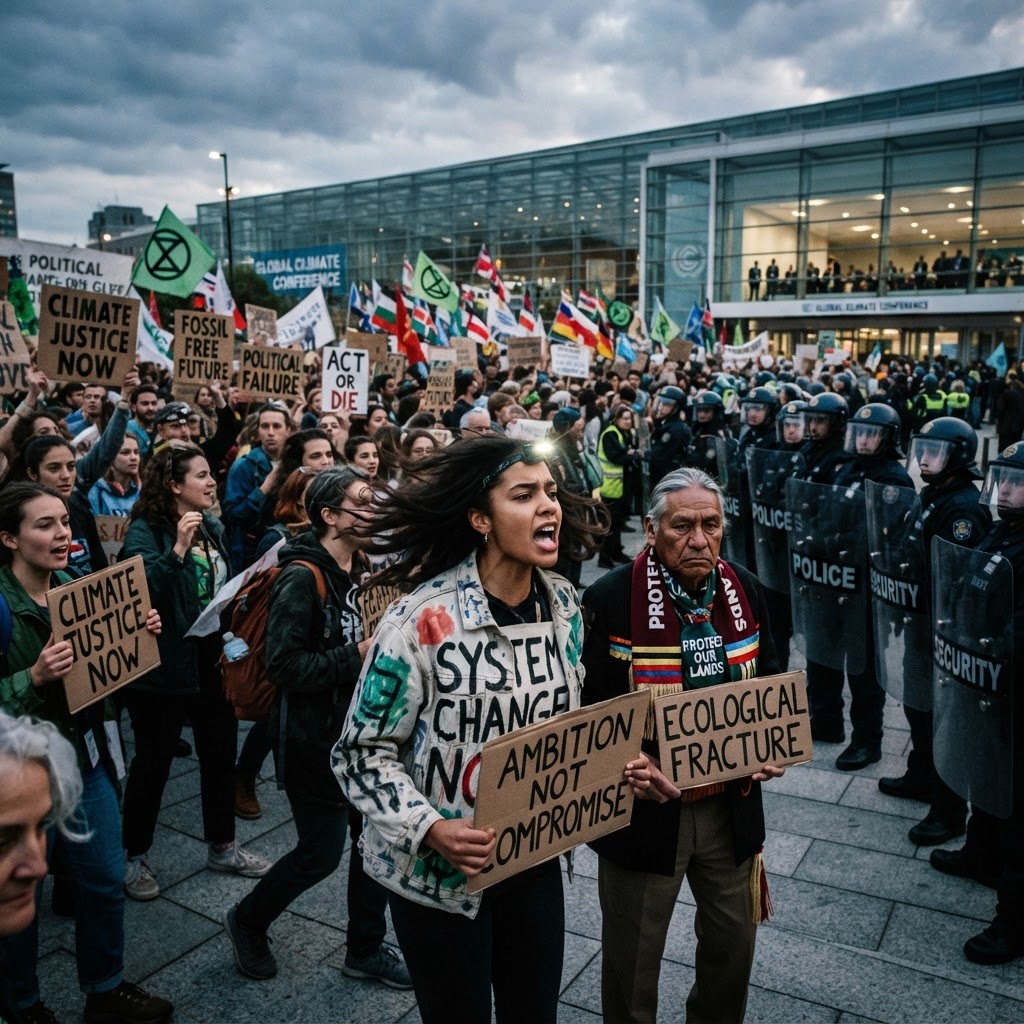
Between Ambition and Backlash: Global Climate Efforts Confront Deepening Political and Ecological Fractures
Even as scientific evidence highlights escalating climate risks and regional vulnerabilities, international policy and domestic environmental governance face mounting legal disputes and shifting political headwinds.