A Fractured Consensus: How Opinion Pages Around the World Reflect an Era of Distrust and Disruption
From growing scrutiny of multilateral institutions to domestic political friction and artificial intelligence debates, international opinion pages highlight a fractured global order navigating rapid technological and geopolitical transitions.

The Strain on Global Governance
Editorial and commentary pages across major world capitals present a consistent diagnosis of our present moment: the post-Cold War institutional settlement is fraying beneath the weight of great-power rivalries, systemic deadlocks, and shifting economic balances. In high-level diplomatic commentary, including debates surrounding leadership within the United Nations, observers argue that foundational multilateral mechanisms increasingly fail to represent the broader international community. Prominent critiques highlight how small coalitions of veto-holding powers continue to overshadow the collective will of the General Assembly, stalling reform and diminishing the credibility of international bodies precisely when cross-border cooperation is desperately required.
Parallel viewpoints emanating from Beijing and parts of the Global South reinforce this critique from a differing strategic angle. State-aligned editorialists consistently stress the urgent need for a more multipolar governance framework, asserting that unilateral trade curbs, sanctions, and protectionist economic policies imposed by Western capitals hinder shared global growth and energy security. This commentary portrays Western domestic policy maneuvers as destabilizing forces that impose external costs on developing economies, framing global governance reform not as a luxury, but as an existential necessity for emerging markets.
Domestic Friction and Election Jitters
Beyond international forums, domestic opinion writing captures intense internal friction across key democracies and regional leaders. In the United States, syndicated columns and political commentary platforms reflect deep anxieties ahead of impending legislative and midterm elections. Commentators are divided between critiques of incumbent policy execution—particularly surrounding cost-of-living concerns, energy policy swings, and fiscal deficits—and strategic evaluations of party alignments across contested legislative races. The debate exposes a polarized electorate caught between administrative promises of economic stability and public frustration with structural inflation and electoral district boundaries.
A similar undercurrent of domestic reckoning is visible throughout Southeast Asia and Latin America. In Manila, prominent editorial boards have turned a critical spotlight onto domestic governance, questioning cabinet reshuffles, fiscal accountability, and systemic deficits in foundational sectors like basic education. Columnists argue that cosmetic political maneuvering cannot compensate for administrative delays and economic volatility, urging state institutions to prioritize transparency and measurable public services over transient political rhetoric. Across multiple continents, the prevailing sentiment in op-ed sections is clear: public tolerance for institutional inefficiency is rapidly thinning.
Technology, Economic Anxieties, and Emerging Fault Lines
Intertwined with geopolitical and electoral disputes is an escalating intellectual debate on the perils and promises of transformative technologies, particularly artificial intelligence. Commentators across major financial and intellectual outlets have begun drawing stark historical parallels, questioning whether the relentless flood of capital into cutting-edge computing infrastructure represents genuine economic revitalization or an unstable speculative bubble reminiscent of previous market crashes. Others caution against the broader societal, ethical, and regulatory risks, examining how rapid algorithmic integration will redefine workforce realities and information ecosystems.
At the intersection of technology and international rivalry, strategic analysts argue that the quest for technological dominance is now setting national risk appetites. When one major superpower accelerates computing capabilities and automation without comprehensive oversight, competing nations feel compelled to deregulate or match speed at the expense of safety protocols. As opinion desks globally grapple with these converging themes, their collective pages offer a striking portrait of a world navigating a fundamental transition: traditional institutions are challenged, domestic politics remain sharply polarized, and the frontiers of technological innovation continue to outstrip society's ability to govern them.
Recommended for you
Similar to “World Opinion”
A Fractured Consensus: How Energy Crises, Tech Hegemony, and Multilateral Strain Are Reshaping Global Commentary
Recent international opinion and commentary reflect a world grappling with escalating oil volatility, the destabilization of legacy multilateral institutions, and the complex societal challenges brought on by rapid artificial intelligence adoption.
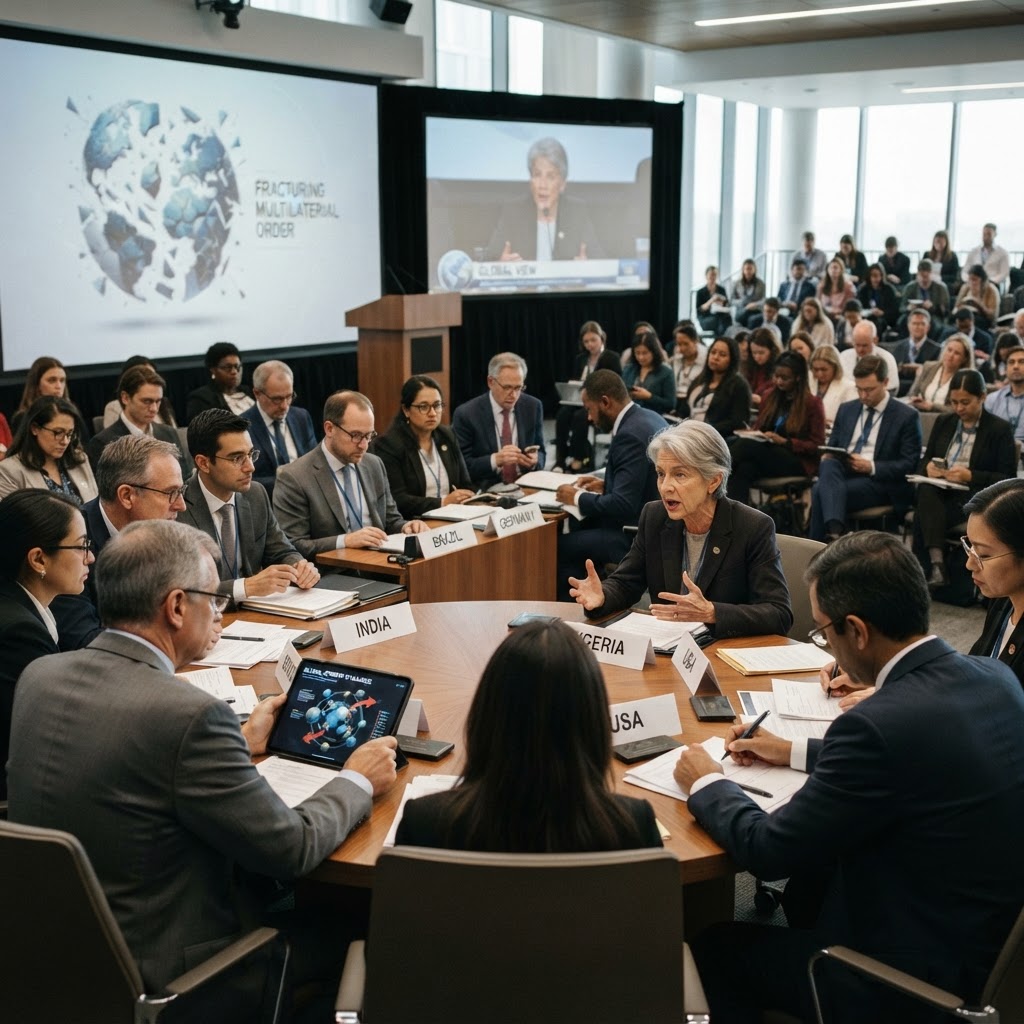
A World in Disjointed Motion: How Global Commentary Views the Fracturing Multilateral Order
Recent international opinion pages reflect growing anxiety over the retreat of major powers from climate commitments, shifting regional alliances, and the moral strains on global institutions.

A Fractured Mandate: Global Commentators Grapple with the Post-Election Reckoning
Opinion pages across the world reflect a tense mixture of relief and deep-seated skepticism following a dramatic political shift in Washington. Analysts argue that while electoral repudiation reshapes domestic power, it does little to repair international trust or resolve escalating global friction.