A Fractured Global Order: Gridlock in Jerusalem, Escalations Across Eurasia, and Shifting Strategic Alliances
Recent diplomatic maneuvers and electoral stalemates across the Middle East, Eastern Europe, and Latin America underscore a deeply fragmented geopolitical landscape marked by parliamentary paralysis and regional realignments.
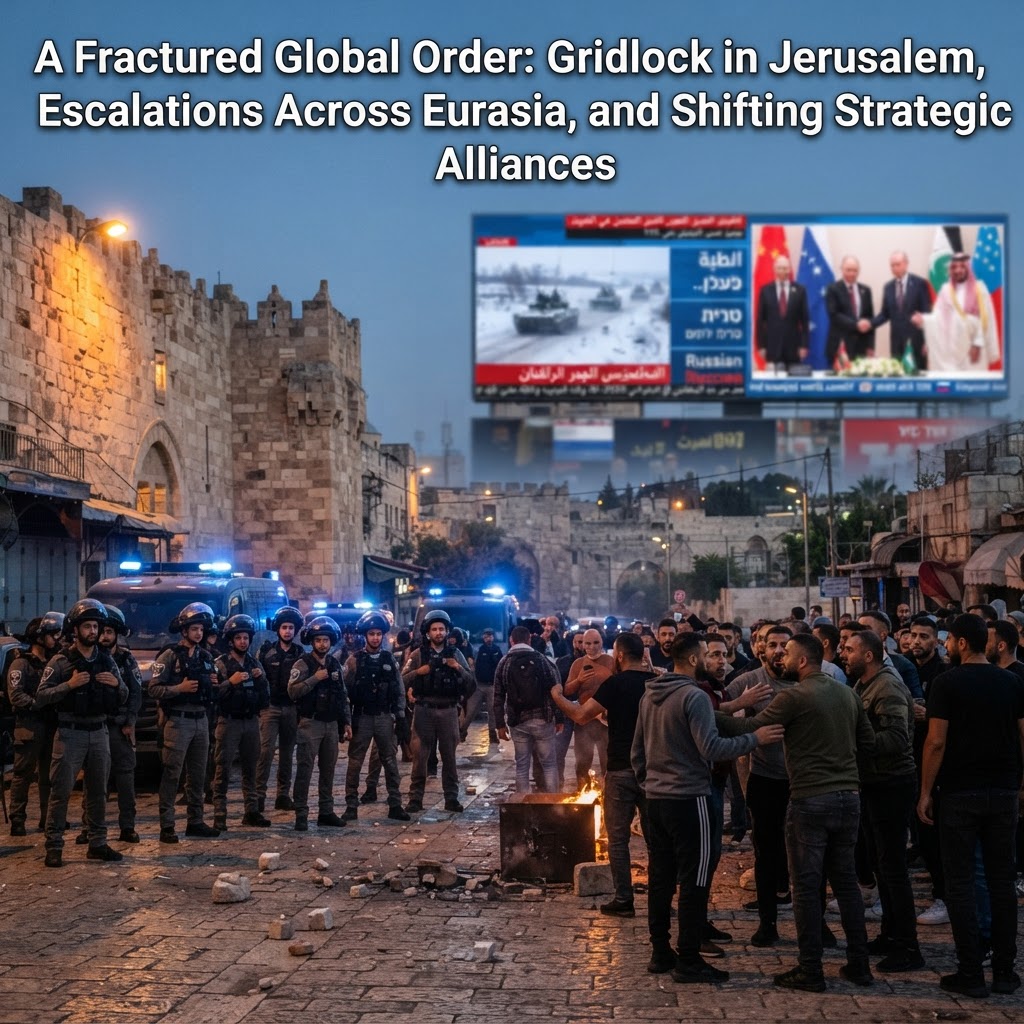
Parliamentary Gridlock and Political Reckoning in Israel
In what has emerged as one of the most closely watched political contests in recent history, Israel faces renewed political paralysis following national parliamentary elections. Initial exit polls and evolving ballot counts reveal a tightly contested deadlock between the ruling right-wing coalition headed by Prime Minister Benjamin Netanyahu and an opposition bloc led by former military chief Gadi Eisenkot, as noted by Xinhua and Euronews. Projections indicate neither faction has secured the vital 61-seat majority required to comfortably establish a cabinet in the 120-seat Knesset.
Eisenkot declared the vote a decisive signal of public dissatisfaction with the incumbent administration, vowing to forge a coalition capable of steering the country out of protracted domestic and regional crises. Concurrently, political strategists note that maneuvering behind the scenes has grown intense, with opposition factions evaluating the delicate possibility of building common ground with Arab parties to break the parliamentary impasse, reported by POLITICO. Analysts highlight that even if official margins narrow further, prolonged caretaker governance could leave Israeli foreign and defense policy stalled during a pivotal regional period.
Shifting Fronts and Fragile Truces Across Eastern Europe
In Eastern Europe, the ongoing war in Ukraine continues to produce contradictory developments on the ground. Drone attacks and localized artillery barrages struck residential and administrative hubs, including recent strikes that caused extensive destruction in Voronezh and parts of Kharkiv, according to Euronews. Yet amid sustained hostilities, humanitarian officials oversaw a rare temporary ceasefire centered on the Russian-occupied municipality of Oleshky, enabling the evacuation of hundreds of civilians from contested zones, as reported by BBC News.
At the diplomatic level, Western leaders face mounting domestic discussions on the long-term defense framework of the continent. While the United Kingdom and Poland finalized a multi-year bilateral defense pact aimed at strengthening NATO's eastern frontier, Scandinavian leaders engaged in direct phone diplomacy with Moscow to urge a resumption of meaningful peace negotiations, highlighted by Euronews. Meanwhile, naval security remains on edge in maritime transit corridors; commercial navigation suffered disruption after drones damaged a Greek-managed cargo vessel off the Bulgarian coast, prompting regional stakeholders like Turkey to demand heightened safety safeguards across Black Sea routes, as reported by eKathimerini.
Sovereignty Realignments and Regional Self-Determination
In Moscow, high-level diplomatic engagements have further revealed a coordinated push by Middle Eastern and Eurasian powers to resist Western interventionism. Russian President Vladimir Putin hosted Iranian President Masoud Pezeshkian, where discussions emphasized regional multipolarity. Pezeshkian emphasized that Middle Eastern nations maintain both the institutional maturity and operational capacity to mediate regional security challenges independently of Washington’s strategic oversight, according to Xinhua.
Economic cooperation also continues to cross geopolitical dividing lines in the energy sector. Moscow confirmed that Turkish investors are preparing to acquire an equity stake in the Akkuyu nuclear power facility, cementing strategic economic interdependency between Ankara and Moscow despite prevailing friction within broader alliance structures, as reported by eKathimerini.
Institutional Friction and Electoral Turbulence in the Americas
The reverberations of democratic contests and institutional friction were equally evident in Latin America. In Brazil, political fallout deepened after federal authorities and the Supreme Federal Court placed defeated presidential contender Flavio Bolsonaro under investigation regarding alleged money laundering, according to Xinhua. His subsequent departure for the United States drew sharp rebukes from President Luiz Inácio Lula da Silva, who described the retreat as an evasion of judicial accountability. The episode drew commentary from former U.S. President Donald Trump, who claimed without corroborating evidence that the Brazilian contest was compromised, as reported by Euronews.
Meanwhile, across the northern border of South America, Venezuelan politics witnessed an unexpected diplomatic pivot. Longtime opposition figure and Nobel Peace Prize laureate María Corina Machado returned from exile to Caracas, calling for direct engagement and dialogue with Vice President Delcy Rodríguez, noted by Euronews. The move suggests an evolving strategy by domestic dissident coalitions to engage executive authorities directly amid shifting regional dynamics.
Conclusion: A World Navigating Structural Uncertainty
Whether manifested in deadlocked parliaments, tenuous frontline evacuations, or evolving maritime and energy corridors, recent days highlight an international community defined by volatile structural transitions. As traditional alliance frameworks adjust to unilateral geopolitical pressures, states worldwide increasingly contend with decentralized power centers, where conventional diplomatic playbooks are consistently tested by domestic polarization and competing multipolar ambitions.
Recommended for you
Similar to “World Affairs”
Global Diplomacy Strained as Energy Pacts, Weapon Shortages, and Political Fractures Reshape World Order
Recent diplomatic realignments, shifting energy agreements between major powers, and escalating regional tensions across Eastern Europe, the Middle East, and Asia are testing long-standing geopolitical alliances.
A Fractured Global Order: Escalating Tensions, Diplomatic Realignment, and Humanitarian Pressures Shape World Affairs
From escalating security flare-ups across the Middle East and Eastern Europe to evolving geopolitical alliances and environmental strains, the global landscape faces intensifying strategic and humanitarian tests.
A Fractured Global Order: Power Shifts, Cyber Threats, and Fragile Truces Reshape World Affairs
From unprecedented cyber warfare and shifting parliamentary power in the Middle East to Arctic shipping alliances and localized humanitarian pauses in Ukraine, recent developments underscore a rapidly fragmenting geopolitical landscape.