The Friction of Fragmented Power: How Global Opinion Reflects a Weary Order
Across political commentary and strategic analyses worldwide, columnists and policy observers are converging on a shared theme: the breakdown of institutional coherence under the weight of geopolitical rivalries and civic disaffection.
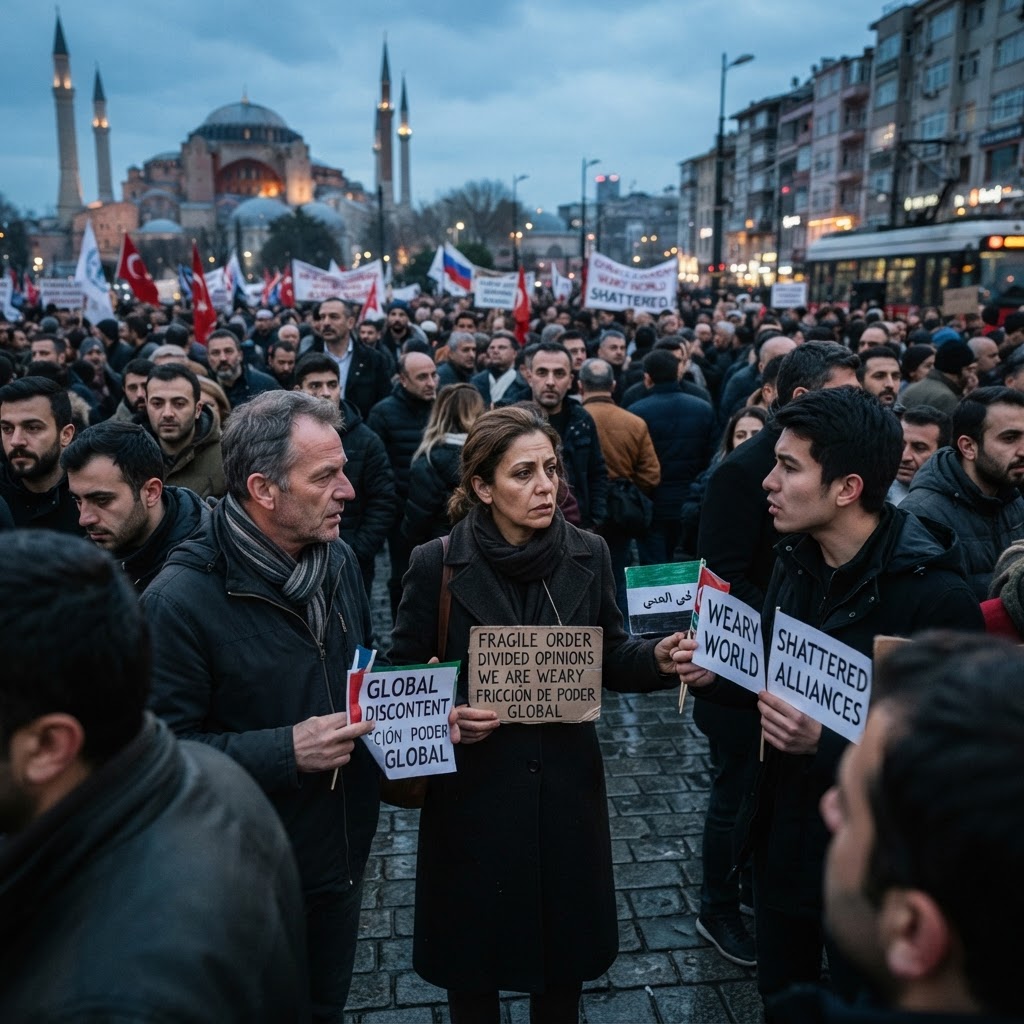
A Disillusioned Global Agora
In commentary pages across continents, the prevailing sentiment is rarely defined by absolute despair, but rather by an acute exhaustion with systemic inertia. From the halls of Western legislative bodies grappling with political polarization to the contested borders of Eastern Europe and the strategic friction of the Indo-Pacific, syndicated columnists and independent essayists are documenting an era marked by tactical survival rather than visionary statecraft. The traditional pillars that long sustained democratic consensus and international order are straining under public cynicism, technological turbulence, and economic realignment.
The Domestic Trenches: Democracy Under Stress
A significant volume of recent political analysis highlights the fragile condition of domestic governance across major democracies. Commentators covering electoral dynamics in the United States and Latin America point to a growing reliance on culture-war flashpoints and aggressive executive maneuvers, often overshadowing substantive policy debate. As editorial boards observe, public trust is eroding as polarization hardens into institutional paralysis. Observers note that debates over social security, economic inequality, and administrative overreach have ceased to be arenas for compromise; instead, they have become existential battles where every political victory feels temporary and pyrrhic.
This erosion is not confined to national capitals. Across state and regional governance, localized fissures increasingly mirror national dividing lines. In commentary tracking legislative trends and judicial interventions, analysts warn that local institutions are becoming weaponized for partisan battles, creating a fractured civic fabric where citizens experience divergent legal and economic realities depending on geographical boundaries.
Strategic Recalibrations in Eurasian and European Security
Parallel to domestic turbulence, defense-oriented essayists and international relations analysts are closely parsing the shifting contours of warfare and strategic deterrence. In defense journals and geopolitical editorial columns, attention has pivoted toward the technological asymmetry defining modern conflicts. The blurring line between inexpensive unmanned aerial systems and high-end precision munitions has triggered an extensive reassessment of conventional military spending and territorial defense doctrine.
Simultaneously, European commentary reflects persistent anxiety over structural vulnerabilities. Columnists tracing the European energy transition continue to debate whether the continent's rapid decoupling from legacy energy pipelines represents genuine resilience or an uncalculated geopolitical gamble ahead of volatile seasons. Coupled with recurring diplomatic standoffs surrounding the ongoing conflict in Ukraine—where public discourse oscillates between tentative interest in diplomatic off-ramps and the brutal reality of sustained attrition—the consensus among international observers is that long-term strategic stability remains elusive.
Governing at the Periphery: Climate, Infrastructure, and Public Health
Beyond the corridors of traditional great-power politics, opinion pieces throughout the Global South emphasize systemic breakdowns that directly impact day-to-day survival. In South and Southeast Asian publications, columnists have focused their critiques on the structural politicization of public services. Critical editorials examine how state healthcare systems suffer when promotions, postings, and resource allocations become contingent on partisan patronage rather than merit and professional ethics. Commentators argue that when public health and civic welfare are subsumed by political expedience, the fundamental social contract between the state and its citizenry disintegrates.
Infrastructure and climate resilience occupy an equally prominent place in regional discourse. Writers tackling urban development across expanding metropolitan centers decry vanity infrastructure projects that prioritize prestige over functional transit networks. Meanwhile, environmental essayists point out the recurring tragedy of reactionary governance, where nations craft emergency reconstruction budgets in the immediate wake of catastrophic floods or climate anomalies rather than investing in proactive mitigation. Across developing economies, opinion leaders increasingly argue that sustainable development will remain impossible as long as international climate finance and domestic governance remain trapped in a cycle of post-disaster improvisation.
The Dilemma of Technological Sovereignty
Woven through global editorial columns is the pressing question of technological governance, particularly regarding artificial intelligence and space data. Analysts observing the divergence between Western regulatory deliberation and aggressive statutory frameworks established in Beijing warn of an emerging regulatory balkanization. Opinion writers note that while tech executives and civic groups in the West voice urgent calls for comprehensive guardrails, alternative governance models have already established practical standards that risk leaving democratic institutions reactive rather than foundational in shaping global ethical norms.
This divide extends into cyberspace and economic security, where the lack of universal multilateral frameworks leaves digital infrastructure vulnerable to state-sponsored actors and transnational cyber syndicates. As commentators reflect on recent international declarations and summit communiques, skepticism remains high regarding whether non-binding multilateral agreements can effectively enforce accountability across geopolitical rivalries.
Synthesizing the Global Mood
Taken together, the global spectrum of opinion paints a picture of a world transitioning between orders. The old architecture of post-Cold War multilateralism is widely recognized as frayed, yet no consensus has emerged regarding the contours of its replacement. Instead, columnists from diverse ideological and regional viewpoints consistently diagnose the same underlying pathology: short-term tactical calculations are dominating long-term governance. Whether addressing domestic social safety nets, regional defense postures, or planetary ecological limits, modern commentary reflects a collective demand for leaders to look beyond the immediate political cycle and confront the structural realities reshaping the century.
Recommended for you
Similar to “Global Opinion”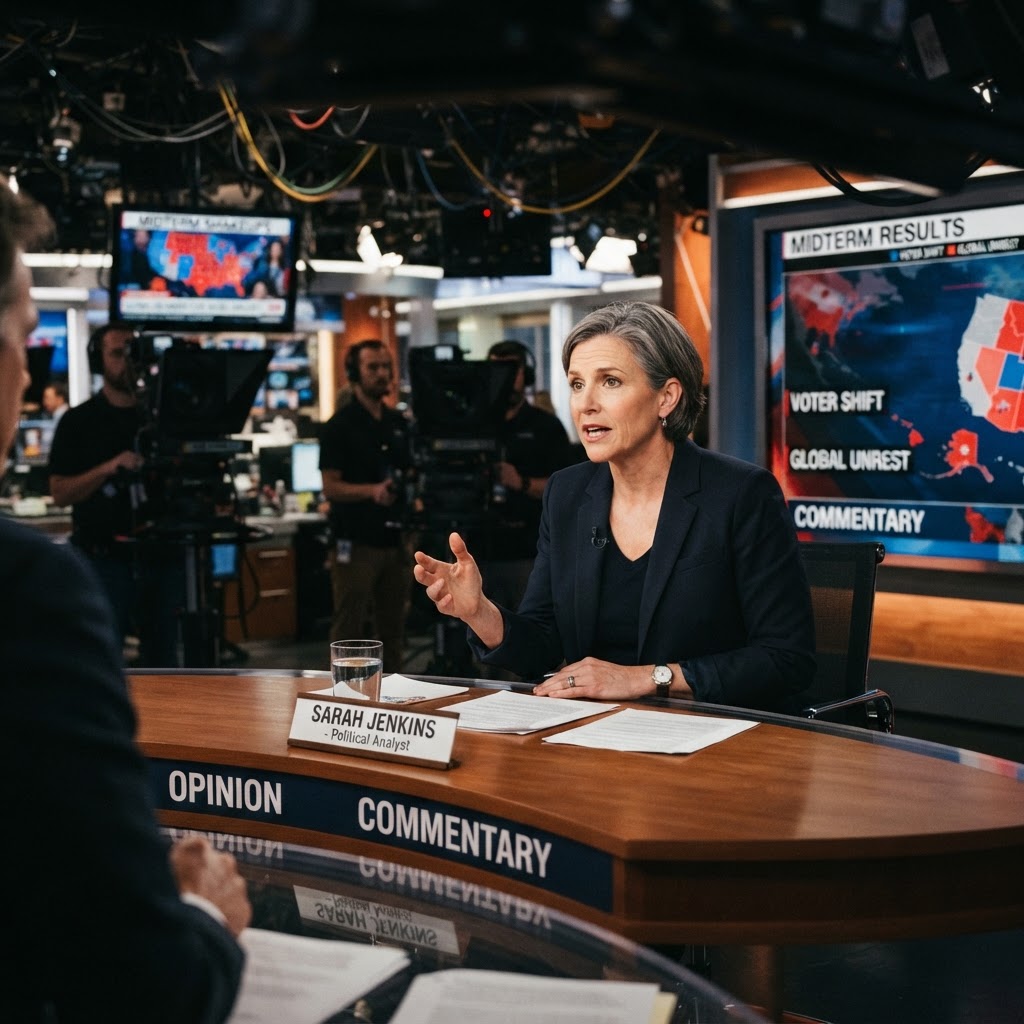
Echoes of a Realignment: How Midterm Shakeups and Global Exhaustion Are Reshaping Political Commentary
In the wake of decisive electoral rejections and shifting foreign policy calculations, opinion columnists worldwide are wrestling with institutional decline, domestic economic fatigue, and the limits of executive power.

A Fractured Consensus: How Opinion Pages Worldwide Are Reckoning with a Shifting Global Order
Recent commentary across leading global publications reflects mounting anxiety over macroeconomic instability, shifting geopolitical alliances, and the disruptive emergence of artificial intelligence.

The Global Rethink: How Geopolitical Fractures and Artificial Intelligence Are Reshaping Opinion Columns
Recent commentary across leading global publications reflects a world reassessing core assumptions, from shifting balance-of-power dynamics in Europe and Asia to the compounding anxieties surrounding artificial intelligence and democratic resilience.