Global Biodiversity and Climate Policy at a Crossroads: Breakthroughs in Finance Clash with National Retrenchment
As international delegates mobilize landmark conservation capital and demand robust nature protections, widening regulatory rollbacks and legislative friction across major economies threaten the coherence of global environmental governance.
A Pivotal Moment for Multilateral Conservation
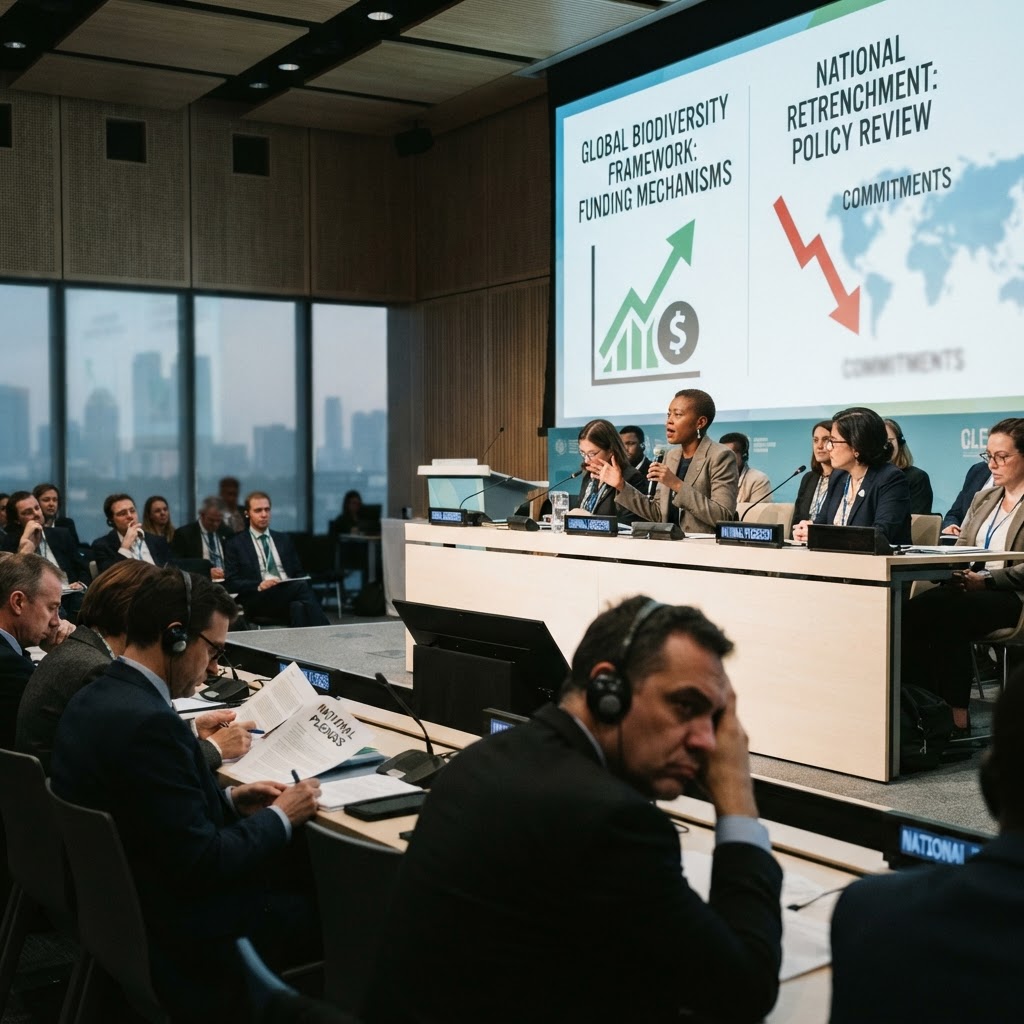
International environmental policy is witnessing a consequential collision between surging global ambition and fractured domestic execution. At the diplomatic forefront, multilateral biodiversity and climate mechanisms have reached a critical juncture. During the recent United Nations Biodiversity Conference proceedings, developing nations and coastal states delivered urgent appeals for sustained, equitable financing to halt ecological decline. From small island developing states in the Pacific to ministers across North America, delegates highlighted that conservation promises made under international frameworks risk hollow outcomes without concrete fiscal transfer mechanisms.
A major focal point of recent deliberations has been the operationalization of global conservation funding instruments, such as the Kunming Biodiversity Fund and expanded facilities under the Global Environment Facility. Representatives from vulnerable regions emphasized that island ecosystems and marine reserves cannot withstand compounding climate shocks—including intense El Niño-driven weather anomalies and rising sea surface temperatures—without accessible, long-term capital. The consensus across high-level summits has been unequivocal: international biodiversity pledges must transition from high-minded aspirations to measurable, locally managed programs that safeguard critical habitats and protect indigenous livelihoods.
Landmark Inflows in Climate Finance
Simultaneously, international climate finance recorded a major milestone with the Green Climate Fund approving nearly $2 billion in record allocations for sustainable infrastructure, ecosystem resilience, and low-carbon transition projects. The newly committed resources are designed not only as direct public investments but as catalytic capital engineered to mobilize significantly larger volumes of private investment across emerging markets.
This financial injection underscores a growing recognition that global energy transition goals and planetary preservation are inextricably linked. The influx of funding aims to accelerate clean power deployment, modernize grid infrastructure, and support nature-based adaptation projects in regions already enduring acute environmental degradation. However, fund administrators and development economists acknowledge that bridging the multi-trillion-dollar gap necessary to reverse environmental degradation requires structural regulatory certainty—a condition that is rapidly deteriorating across several leading industrial powers.
The Friction of Federal Rollbacks and Regulatory Divergence
In sharp contrast to international financing milestones, domestic environmental protections in key industrialized jurisdictions are encountering substantial political resistance and policy reversal. In the United States, shifting federal priorities have initiated a sweeping re-evaluation of long-standing environmental statutes and clean energy initiatives. Federal reviews targeting air quality rules, renewable infrastructure permitting, and targeted conservation programs have generated profound regulatory volatility across the energy and transport sectors.
Analyses from nonpartisan environmental monitors note that administrative attempts to weaken federal emission standards and stall offshore clean energy developments risk setting national decarbonization targets off course. Federal agencies have also moved to reconsider flagship rules governing fugitive methane emissions and power plant pollution, inciting swift legal and jurisdictional pushback. In response, several subnational governments are stepping into the breach. Energy-producing states like Colorado have moved proactively to enact comprehensive, state-level methane detection and reduction standards that match or exceed former federal baselines, demonstrating a bifurcated landscape where local jurisdictions must defend environmental benchmarks against federal retrenchment.
Legislative tensions are similarly acute in other high-profile regions. In California, fierce political debates have erupted over statutory efforts backed by industry groups to streamline infrastructure permitting by restricting public environmental reviews under landmark state statutes. Critics argue that fast-tracking industrial and technological installations under the banner of modernizing infrastructure threatens to dismantle vital safeguards for local biodiversity, environmental justice communities, and water resources.
International Governance and the Challenge of Cross-Border Alignment
Across the Atlantic, European environmental governance is navigating its own complex phase of legislative evolution and transboundary friction. While European countries continue to demonstrate strong baseline performances in international environmental rankings—driven by stringent standards on industrial pollution, waste management, and decarbonization—challenges persist around regulatory divergence. In the United Kingdom, recent statutory reviews evaluating international environmental protection standards have underscored growing divergence from the European Union following post-Brexit legislative overhauls.
As the European Union updates directives on urban wastewater treatment, circular economy mandates, and extended producer responsibility, cross-border industries and policymakers face mounting compliance hurdles. Environmental policy institutions stress that keeping pace with dynamic regulatory standards across key trading partners is essential to preventing cross-border ecological arbitrage, where lower baseline protections in one jurisdiction undermine collective progress on ocean health, chemical safety, and air purification.
A Fractured Landscape Demanding Cohesion
The contemporary environmental arena is defined by stark paradoxes. Technological monitoring breakthroughs—bolstered by advanced satellite observation and artificial intelligence tools—now provide scientists and regulatory bodies with unprecedented clarity regarding deforestation rates, methane leaks, and ocean warming. Furthermore, international institutional capital is flowing toward conservation at historic scales.
Yet, the efficacy of these scientific and economic instruments remains contingent upon consistent, enforceable legal frameworks. When major economies weaken environmental reviews, challenge established pollution standards, or endorse dubious recycling claims that obscure industrial waste realities, the foundation of global environmental health weakens. To navigate the dual crises of climate change and biodiversity loss, governments worldwide must reconcile domestic politics with international stewardship, ensuring that the ambitious frameworks forged on the diplomatic stage are matched by rigorous, unyielding enforcement on the ground.
Recommended for you
Similar to “Environment”
Global Environmental Frontlines: Biodiversity Pledges, Water Security, and Carbon Accounting Collide
As international delegates advocate for indigenous leadership and systemic water governance, new scientific milestones in underground carbon sequestration arrive alongside acute warnings of accelerating glacier loss and regional regulatory friction.
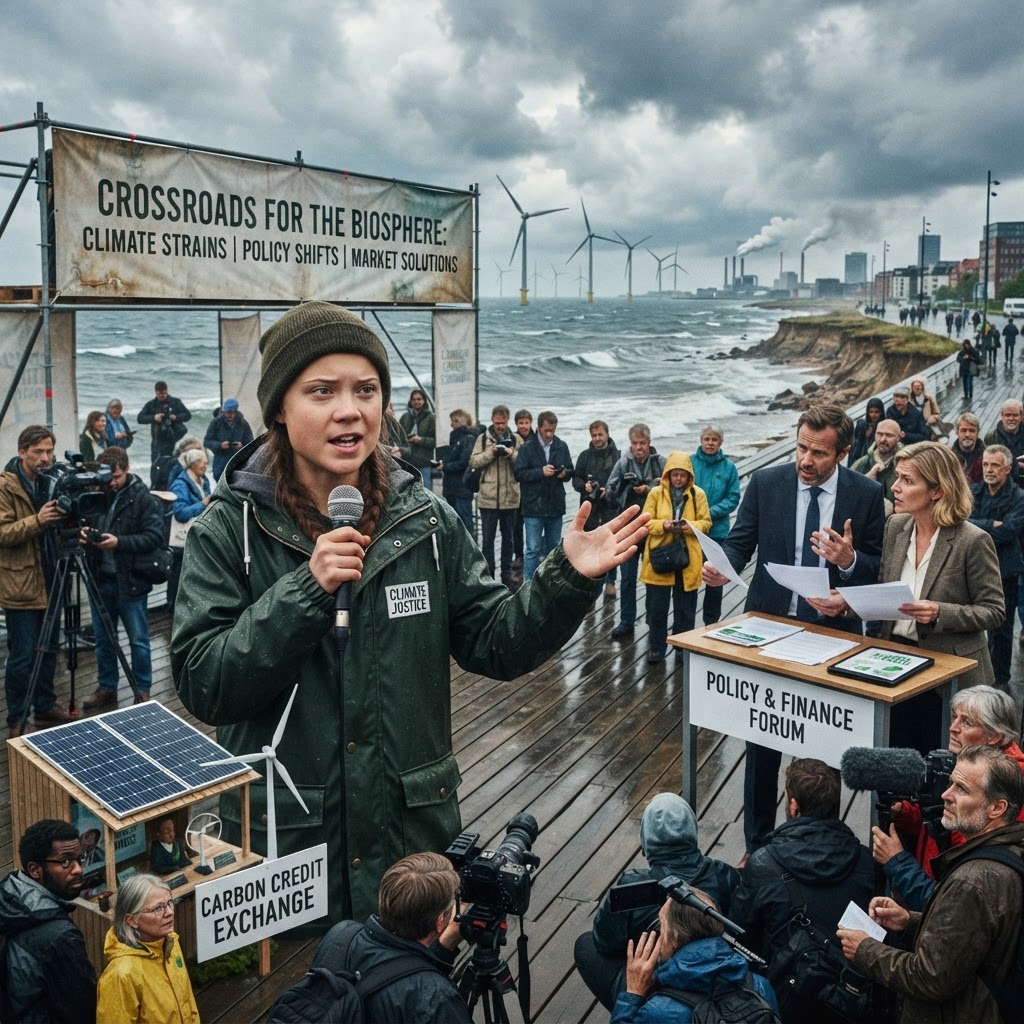
A Crossroads for the Biosphere: Escalating Climate Strains Clash with Policy Shifts and Market Solutions
As international bodies sound alarms over imminent temperature thresholds and biodiversity collapse, nations face rising friction between environmental deregulation and emerging market-driven carbon accountability.

Global Environmental Governance at a Crossroads: Finance Fractures, Ecological Strain, and the Scramble for Accountability
As international climate finance disputes intensify and extreme weather disasters escalate globally, nations struggle to balance fragile conservation commitments against systemic enforcement hurdles.