Navigating the New Multipolarity: Global Commentators Confront an Era of Friction and Realpolitik
Opinion pages and geopolitical essays worldwide are converging on a blunt reality: the fraying of rules-based multilateralism has given rise to raw realpolitik, volatile trade strategies, and high-stakes defense realignments.

The Demise of Rules and the Return of Coercive Power
Across regional commentaries and international editorial desks, a single underlying premise has taken center stage: the post-Cold War framework that governed international diplomacy is disintegrating into fractured spheres of influence. As former diplomat Maleeha Lodhi argued in an editorial for the Asia News Network, the modern landscape is rapidly conforming to a 'might-is-right' order. With global conflicts reaching historic heights and international norms systematically bypassed, mid-sized nations and global powers alike find themselves navigating a multipolar friction zone where institutional guarantees carry increasingly little weight.
This shift from institutional arbitration toward raw bilateral bargaining is unfolding visibly across critical global trade corridors and maritime chokepoints. Tensions surrounding essential passages, such as the Strait of Hormuz, continue to underline how vulnerable global energy flows and commodity pricing remain to sudden geopolitical brinkmanship, as reported in regional coverage by the Kuwait Times. For international analysts, these flashpoints are no longer viewed as isolated diplomatic disputes; rather, they reflect a wider systemic erosion where economic access and resource supply lines are openly wielded as tools of strategic coercion.
The Geopolynomics Dilemma: Fractured Trade and National Strategy
This restructuring of the global political architecture is directly disrupting international commerce. In an essay exploring economic diplomacy during periods of geopolitical friction published in The Daily Star, economists note that the world has entered an era of 'geopolynomics'—the unavoidable collision of international trade networks with hard geopolitical calculations. For eight decades, institutional globalization provided a common playing field that enabled rapid growth across emerging economies. Today, Western alliances and rival strategic blocs are aggressively reassessing trading patterns, onshore capacities, and mutual interdependencies.
For developing countries and export-dependent nations, this turn away from standard multilateral pacts presents existential challenges. With traditional World Trade Organization rules weakened, governments are being pushed to adopt highly transactional economic statecraft. Opinion writers emphasize that relying purely on historical tariff privileges or broad multilateral forums is no longer sufficient; survival now demands building resilient domestic regulatory structures, forging pragmatic bilateral corridors, and cushioning consumer economies against recurring geopolitical supply shocks.
Rethinking Military Posture and the High-Tech Battlespace
Concurrently, defense-oriented publications are hosting intense debates over the changing physics and economics of modern deterrence. Analyses featured in Defense News illustrate how strategic thinkers are divided over military posture, questioning whether traditional forward deployments and legacy capital assets remain resilient or if they expose forces to severe vulnerabilities against sophisticated, layered denial networks. Strategists warn that miscalculating regional balances, whether by overextending naval footholds or committing to vulnerable littoral doctrines, risks providing decisive tactical advantages to adversaries.
Meanwhile, commentary from defense observers in Global Defense Insight focuses on the narrowing gap between uncrewed autonomous systems and traditional high-end munitions. From the proliferation of low-cost strike drones to sovereign initiatives developing resilient counter-drone architecture, the rapid diffusion of commercial technology into military doctrine is redefining national security. Analysts stress that technical superiority no longer hinges exclusively on exquisite, high-cost platforms, but rather on rapid defense innovation, adaptable acquisition cycles, and the agile integration of automated data at the tactical level.
Competing Blueprints for an Unstable Horizon
As international institutions struggle to find common ground on vital questions ranging from debt relief and climate finance to cybersecurity norms, rival ideological visions are competing to fill the void. Commentary in the South China Morning Post champions comprehensive alternative frameworks—such as Beijing's expansive multilateral initiatives—as pathways to sustainable governance and collective economic progress. Proponents of these initiatives argue that they offer tangible, development-focused infrastructure for a fragmented world looking beyond traditional Western-led institutions.
Yet, observers across diverse platforms maintain that competing regional visions alone cannot mitigate the broader risks of global fragmentation. Whether analyzing domestic energy transitions, fiscal sustainability, or regional defense postures, the prevailing consensus across international opinion pages is stark: the global architecture has definitively entered an era characterized by hedge strategies, transactional pacts, and persistent volatility. Success in this fragmented environment will belong to states that discard institutional complacency and balance strategic autonomy with hard-nosed pragmatic diplomacy.
Recommended for you
Similar to “Geopolitics”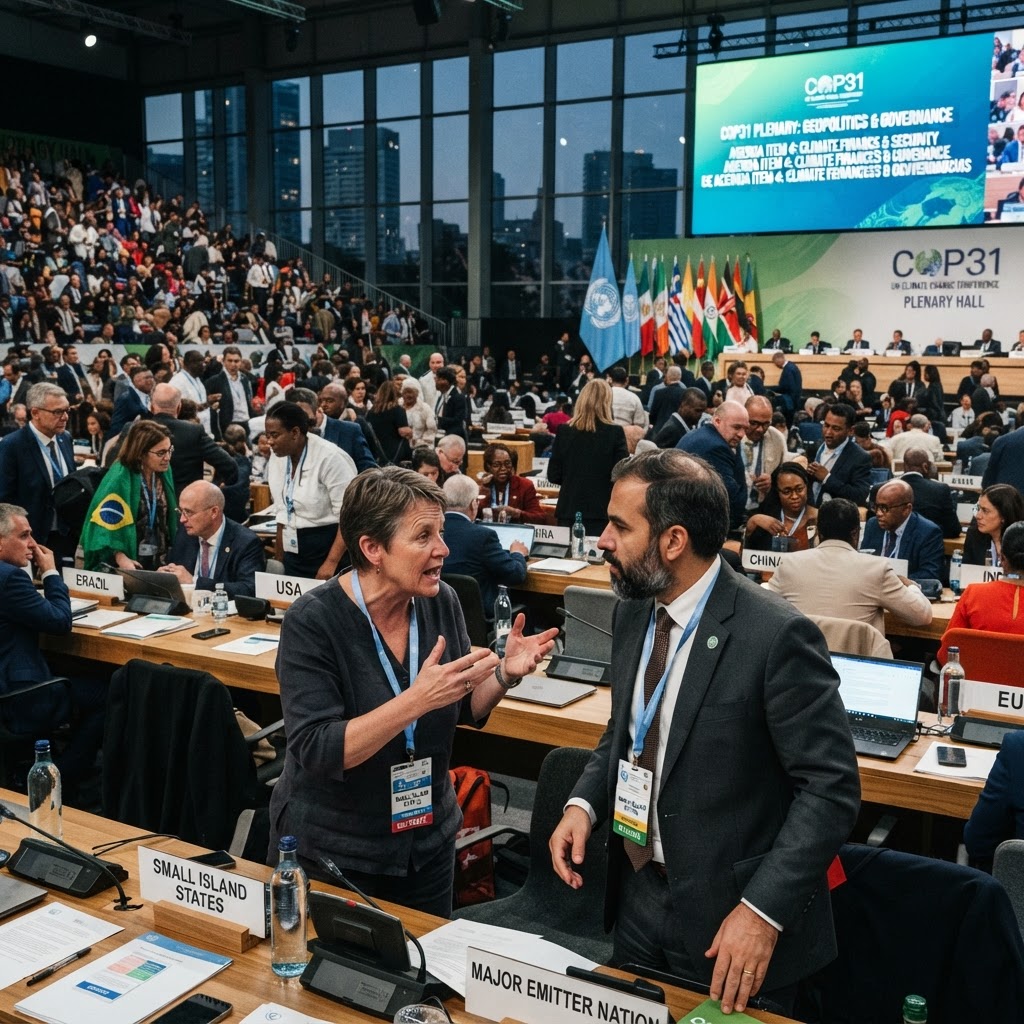
A Fractured Planet: Why Climate Governance and Geopolitics Are Colliding at COP31
As global commentators debate the stakes of COP31 in Antalya alongside shifting geopolitical tides, international opinion increasingly points toward a structural breakdown in traditional multilateralism.
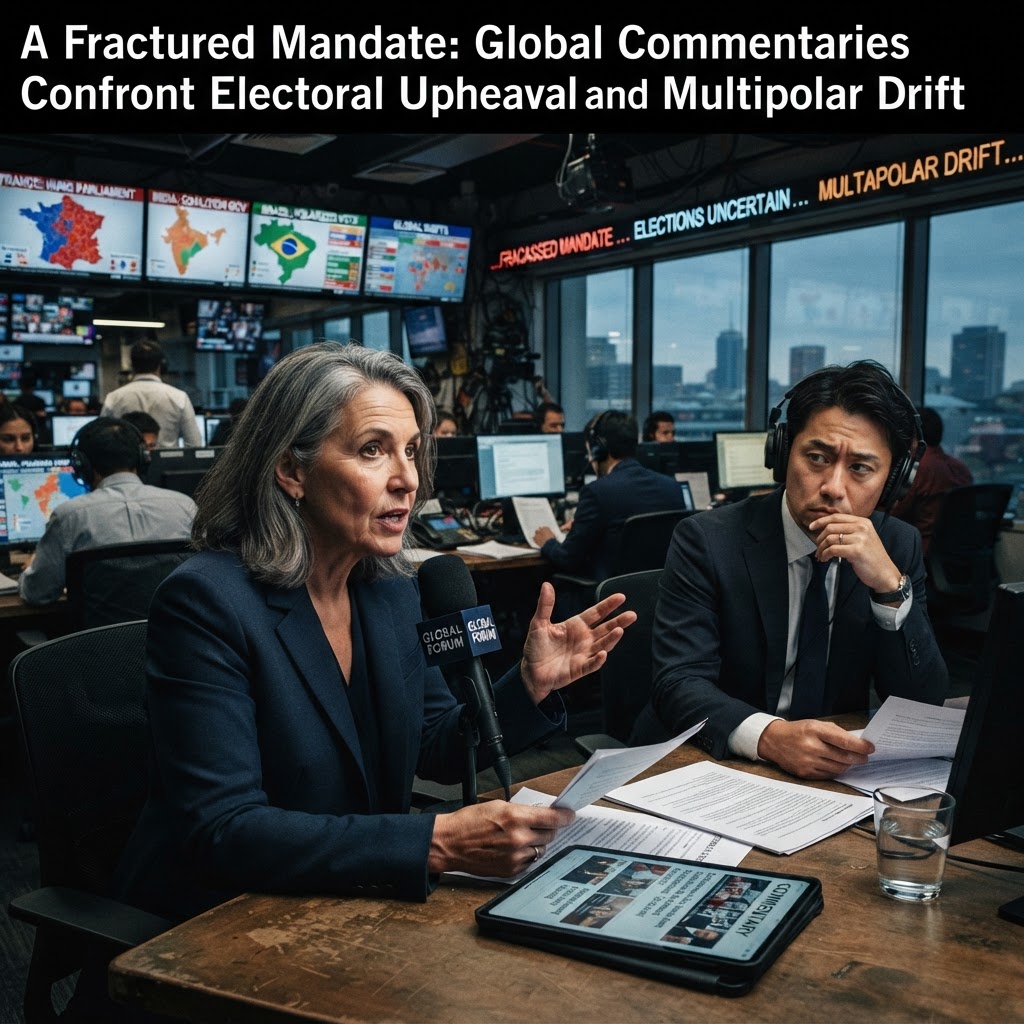
A Fractured Mandate: Global Commentaries Confront Electoral Upheaval and Multipolar Drift
Recent opinion columns and editorial boards worldwide reflect a shifting geopolitical and domestic landscape, as commentators digest consequential legislative midterms and grapple with the decline of multilateral rules.

A Fractured Consensus: How Opinion Pages Around the World Reflect an Era of Distrust and Disruption
From growing scrutiny of multilateral institutions to domestic political friction and artificial intelligence debates, international opinion pages highlight a fractured global order navigating rapid technological and geopolitical transitions.