A Multipolar Reckoning: Navigating the Friction of Shifting Alliances and Domestic Upheaval
As commentary sections around the world parse tectonic political realignments and military recalibrations, public discourse reveals a shared anxiety over eroding international norms and contested domestic mandates.
The Fragmentation of Global Order
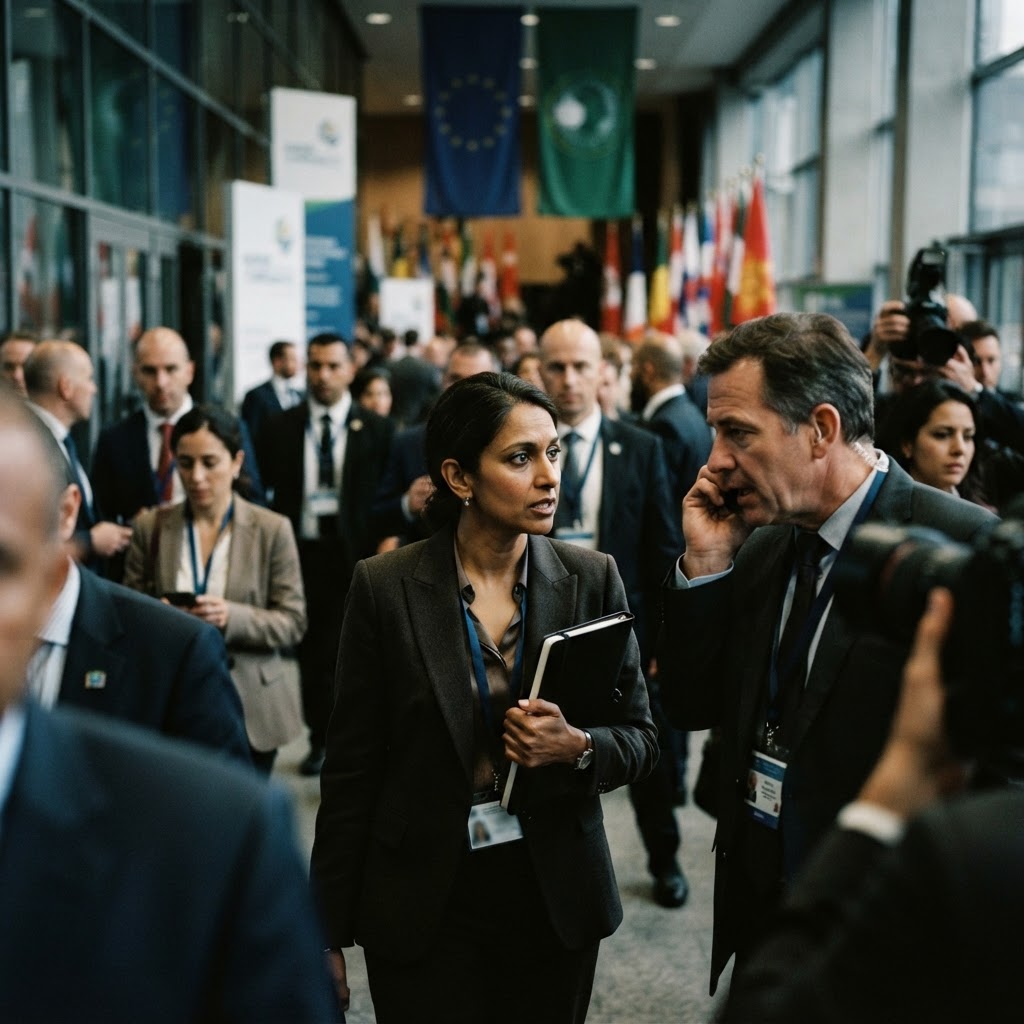
In recent days, editorial columns and geopolitical commentaries across major international publications have converged on a sobering diagnosis: the post-Cold War institutional architecture is struggling under the weight of escalating unilateralism. Observers scanning regional diplomacy point out that transactional power dynamics are increasingly overshadowing multilateral consensus. Former diplomatic envoys and defense strategists writing across platforms such as the Asia News Network and international defense journals argue that the international arena is sliding toward a 'might-is-right' paradigm, wherein traditional rules-based protections are sidelined in favor of regional deterrence and sovereign self-interest.
This friction is particularly acute in cross-border security calculations. From energy vulnerabilities across Europe to naval posturing in the Indo-Pacific, defense essayists highlight that strategic stability is no longer guaranteed by long-standing treaty alliances alone. Commentators note that nations find themselves balancing between domestic public exhaustion over prolonged conflicts and the urgent necessity of modernizing deterrence capabilities, from counter-drone technology to secure supply networks. The prevailing sentiment across opinion desks is that multipolarity has arrived not as a balanced equilibrium, but as a fragmented theater of competing interests where miscalculation carries unprecedented costs.
Domestic Mandates and the Politics of Accountability
While foreign policy commentators grapple with systemic shifts abroad, domestic opinion pages in North America and Western democracies are dominated by fierce debates over governance, electoral mandates, and institutional checks. Analysts reflecting on midterm realignments in outlets such as The New York Times and regional platforms like the Las Vegas Sun News examine how narrow legislative majorities and polarized electorates complicate the path forward for newly empowered lawmakers. Editorial boards emphasize that electoral triumphs often mask deep ideological fissures within winning coalitions, setting up sharp collisions between progressive activists pushing for transformational social policy and establishment leaders counseling caution.
A recurring thread in recent political commentary is the risk of misinterpreting electoral outcomes as blank checks for radical policy shifts. Writers underscore that voter discontent is frequently rooted in economic anxiety, rising living costs, and institutional friction rather than wholesale ideological conversion. Consequently, commentators suggest that legislators who prioritize narrow partisan score-settling over broad governance risks alienating a restless public. At the same time, discussions around legislative oversight question whether divided government will serve as a stabilizing counterweight or degenerate into chronic procedural gridlock.
Civil Liberties, Media Freedom, and Institutional Trust
Beyond geopolitical friction and electoral arithmetic, an equally vocal body of opinion has emerged around the fragility of civil society and press freedom. Editorial boards across South and Southeast Asia, such as those highlighted by regional monitors, have sounded alarms over growing state pressure on newsrooms and independent journalists. Columnists argue that when administrations resort to legal intimidation, regulatory harassment, or newsroom raids, they weaken the very democratic legitimacy they claim to uphold. Freedom of the press, these editors remind readers, cannot be treated as an expendable luxury during times of domestic political sensitivity.
This erosion of trust extends into broader cultural and institutional realms. Commentators in cultural and religious journals are scrutinizing how ideological polarization fractures community cohesion and isolates diaspora groups. Essayists observe that individuals across civil society, philanthropy, and corporate spaces increasingly encounter pressure to suppress personal convictions or navigate hostile ideological litmus tests. The consensus across these disparate pieces of commentary is that democratic resilience relies just as much on cultural pluralism, public health accountability, and open discourse as it does on formal ballot measures or macroeconomic performance.
Synthesizing the Editorial Horizon
Taken together, the prevailing editorial discourse of recent days reflects a world at an uncomfortable crossroads. Commentators are not merely documenting crises; they are warning of the compound risks that arise when international norms weaken simultaneously with domestic institutional fatigue. Whether examining diplomatic repositioning in Asia, legislative friction in Washington, or press intimidation in fragile democracies, opinion writers are urging public leaders to move beyond reactive politics. As public debate demonstrates, navigating this turbulent climate will demand not only strategic restraint abroad, but a renewed commitment to institutional integrity and democratic accountability at home.
Recommended for you
Similar to “Global Opinion”
A World in Flux: How Geopolitics, AI Disruptions, and Climate Realism Are Reshaping Global Opinion
Recent commentary across major international publications reveals a shared reckoning over shifting electoral dynamics, the unvarnished realities of the global climate crisis, and the unchecked footprint of modern technology.
A World Turning Inward: How Fractured Alliances and Economic Nationalism Are Redefining Global Governance
Recent commentary across leading global editorial pages reveals an escalating anxiety over economic nationalism, shifting migration compacts, and the gradual disintegration of post-war international frameworks.
A World in Disjointed Motion: How Global Commentary Views the Fracturing Multilateral Order
Recent international opinion pages reflect growing anxiety over the retreat of major powers from climate commitments, shifting regional alliances, and the moral strains on global institutions.