Frontiers in Medicine and Public Health: From Precancerous Biomarkers to Global Preventative Shifts
Recent breakthroughs in non-invasive cancer screening, dietary sodium reduction, and maternal-focused clinical trials are reshaping healthcare delivery even as public health infrastructure confronts funding and epidemic pressures.
A New Horizon in Early Oncology Diagnostics
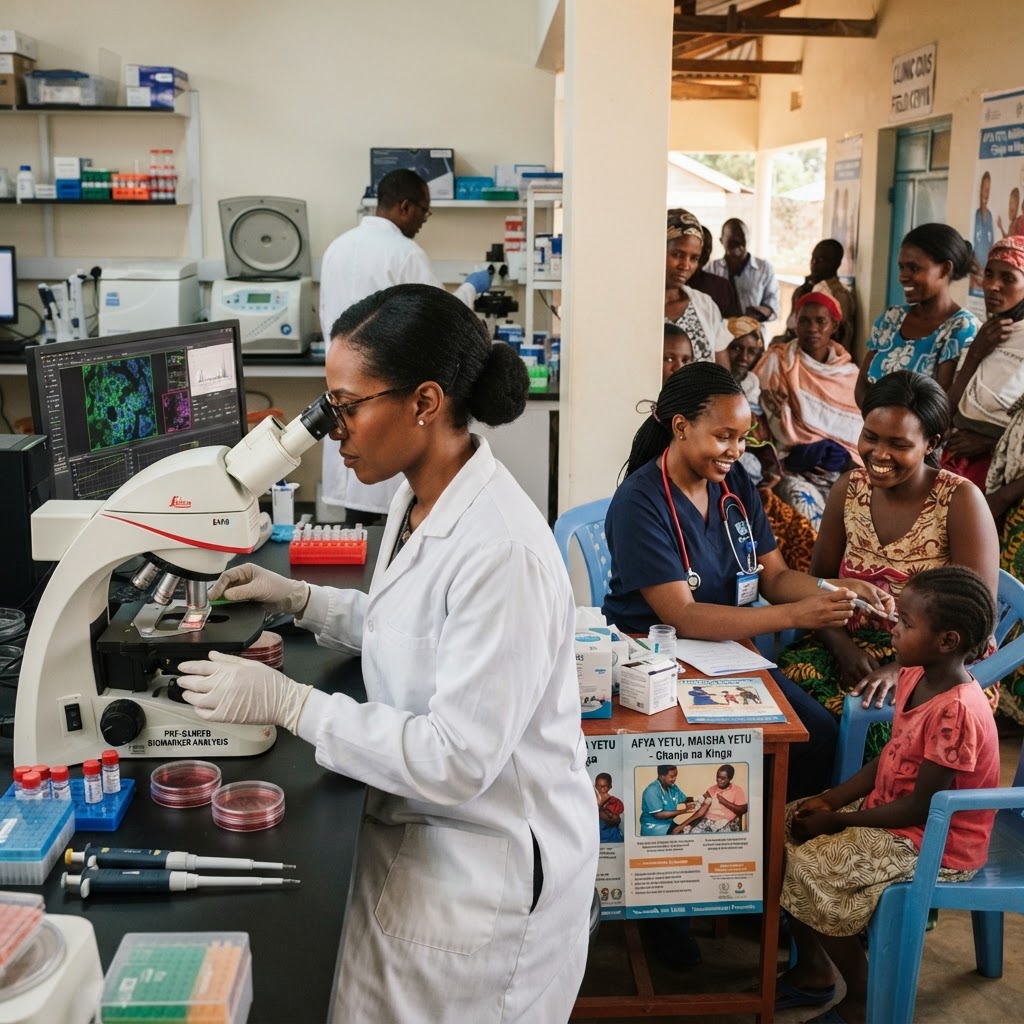
In one of the most promising recent breakthroughs in oncology, researchers have unveiled a novel blood-based screening mechanism capable of detecting ovarian cancer at its earliest, precancerous stage. Long labeled a silent killer due to its propensity to evade detection until reaching advanced, highly invasive phases, ovarian cancer has historically lacked reliable early-stage screening tools. An international multi-institutional initiative led by investigators at the Hoag Family Cancer Institute demonstrated that their newly developed assay accurately identified serous tubal intraepithelial carcinoma (STIC)—the precursor lesion of high-grade serous ovarian cancer—in over 92 percent of affected women within a validation cohort, while achieving a 98.2 percent specificity in healthy controls.
By zeroing in on systemic stromal and tumor-associated indicators prior to tissue invasion, this diagnostic approach shifts the paradigm of cancer intervention from late-stage containment to true secondary prevention. If confirmed in prospective trials, liquid biopsy assays of this caliber could provide clinicians and high-risk populations with an unprecedented window of opportunity for prophylactic intervention, dramatically improving long-term survivorship rates.
Global Dietary Interventions: The Power of Salt Substitution
Parallel to high-tech diagnostic advancements, population-level health research is demonstrating that modest, accessible lifestyle modifications can produce massive epidemiologic dividends. An extensive global modeling assessment conducted by The George Institute for Global Health evaluated the systemic impact of transitioning domestic salt supplies to potassium-enriched salt across 193 nations. The findings suggest that replacing traditional table salt could avert nearly three million premature deaths and ten million new cases of cardiovascular and chronic kidney disease annually.
Cardiovascular conditions remain the leading driver of mortality worldwide, responsible for nearly 20 million deaths per year. While clinical strategies often prioritize pharmacological blood pressure management, the universal adoption of mineral-enriched substitutes directly addresses high dietary sodium consumption and pervasive potassium deficits. Health economists and public health officials are increasingly framing salt substitution not merely as an individual wellness choice, but as a critical, cost-effective structural intervention capable of preventing one in ten cardiovascular fatalities across diverse socio-economic regions.
Addressing Blind Spots in Clinical Pharmacology and Women's Health
Medical innovation is also turning toward historically neglected demographics in pharmaceutical safety. Recent programmatic updates from multinational research bodies such as the Global Health EDCTP3 Joint Undertaking highlight a coordinated international drive to eliminate evidence gaps concerning pregnant and lactating women. For decades, pregnant individuals were routinely excluded from clinical trials due to ethical and regulatory complexities, creating an environment where expectant mothers and their physicians frequently navigate infectious disease and chronic therapies without robust pharmacodynamic data.
Targeted trials—such as the DOLPHIN-3 study examining long-acting injectable antiretroviral therapies for postpartum mothers in South Africa and Uganda—demonstrate how inclusive clinical research design can protect vulnerable populations from unintended side effects while optimizing disease management. Regulatory agencies in Europe and Africa are working in tandem to establish adaptive protocols that integrate these cohorts into late-stage trials, setting a precedent for equitable, evidence-based drug development.
Epidemic Pressures and Systemic Vulnerabilities
Despite notable clinical achievements, global public health systems remain acutely vulnerable to infrastructural deficits, financial retrenchment, and climate shocks. Surveillance data published by the World Health Organization highlights stark contradictions in modern disease control: while overall reported cases of waterborne epidemics such as cholera showed regional fluctuations, annual fatalities surged by 30 percent in vulnerable populations, setting modern records. Although global manufacturing of oral cholera vaccines has expanded significantly, extreme weather events and degraded sanitation infrastructure continue to overwhelm local response capacities.
These operational strains are further amplified by shifting donor dynamics and domestic budget cuts. Analyses exploring international assistance reductions, such as adjustments to USAID health spending noted by industry observers at BenefitsPRO, warn of cascading disruptions to primary healthcare logistics, maternal clinics, and disease tracking in developing nations. Economists emphasize that health shocks rarely remain localized; fragile health systems in emerging economies invariably feed back into international supply chain bottlenecks, global market instability, and elevated healthcare liabilities worldwide.
A Dual Mandate for Contemporary Health
The collective trajectory of modern health policy reflects a critical dual mandate: the relentless pursuit of high-precision molecular medicine alongside the urgent stabilization of foundational public health assets. Moving forward, the true efficacy of cutting-edge biomarkers, advanced therapeutics, and large-scale preventive strategies will depend on the capacity of health systems to deliver these innovations equitably, ensuring that scientific progress translates into universal, sustainable protection against both emerging and perennial health crises.
Recommended for you
Similar to “Global Health”
Frontiers of Modern Medicine: Emerging Therapies, Regulatory Milestones, and Shifting Global Priorities
Recent advances across biotechnology, drug safety investigations, and public health infrastructure are reshaping both clinical practice and global healthcare delivery.
Frontiers and Fractures: Global Health Advances Amid Funding Shifts and Outbreak Crises
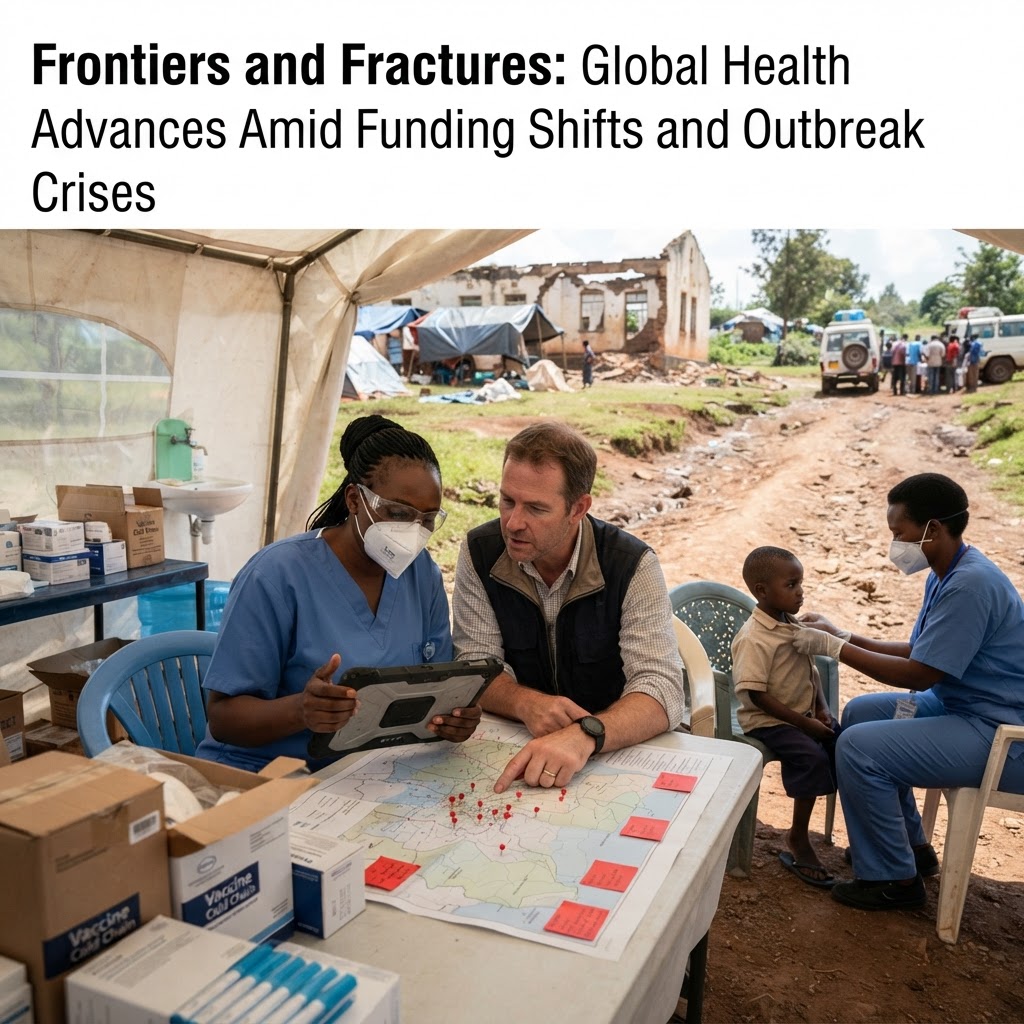
Recent breakthroughs in oncology and precision diagnostics are transforming modern medical practice, even as international public health infrastructure grapples with geopolitical funding shifts and persistent infectious disease crises.

Frontiers in Global Medicine: Navigating Epidemic Preparedness, Chronic Illness, and Breakthrough Therapeutics
Recent shifts across global healthcare highlight an intensifying dual focus: tackling urgent infectious threats and systemic health risks while pioneering targeted biological interventions for complex chronic disorders.