Global Climate Diplomacy Confronts Economic Pressures, Adaptation Shortfalls, and Technological Dilemmas
As negotiators assemble in Antalya for COP31 amidst warnings that global warming will overshoot vital thresholds, international environmental policy faces severe tests ranging from national vehicle policy rollbacks to the ecological burdens of the artificial intelligence boom.

The Antalya Summit Opens Under the Shadow of Overshoot
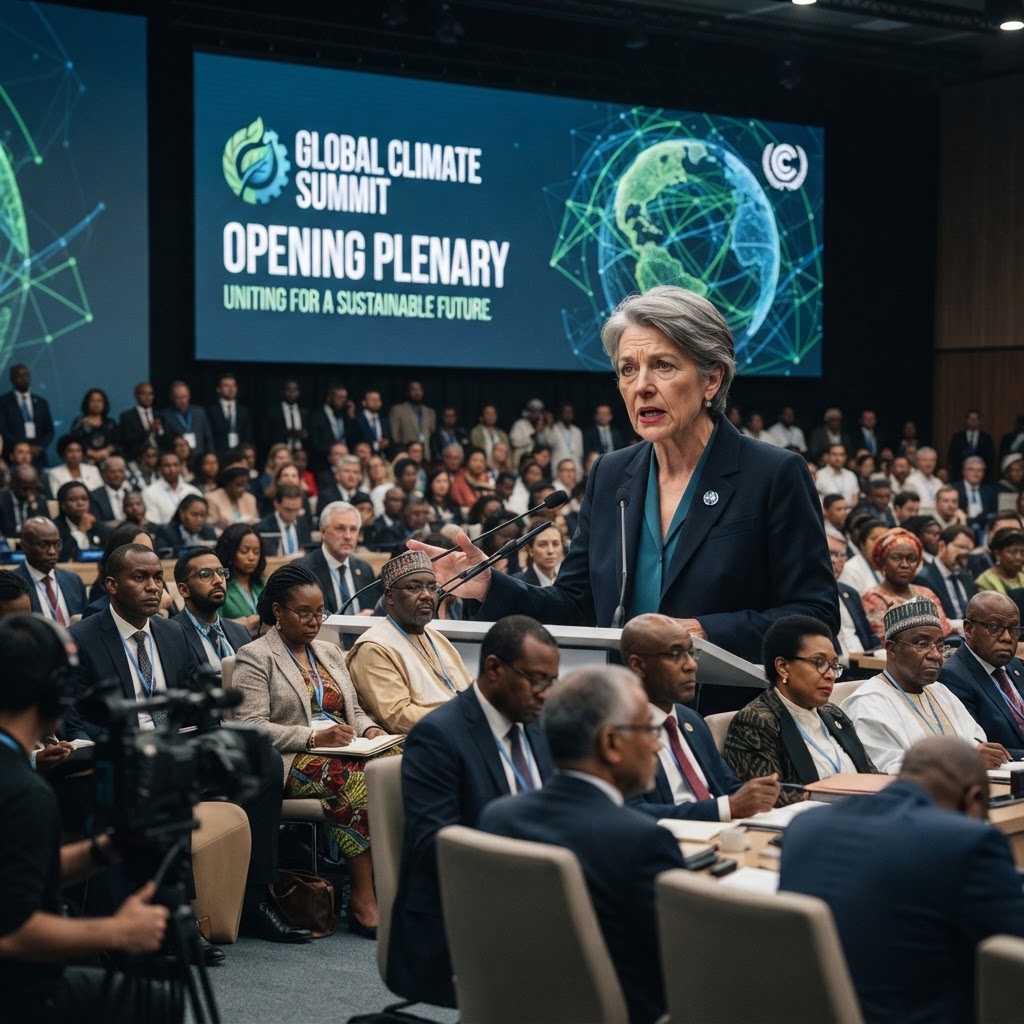
International environmental negotiations have reached a critical juncture as delegates and ministers convene in Antalya, Turkey, for the COP31 United Nations Climate Change Conference. The summit marks the first global gathering since scientific evaluations confirmed that the planet is almost certain to miss the essential benchmarks necessary to prevent temperatures from temporarily breaching critical climate thresholds. This reality of entering an 'overshoot era' has reshaped discussions from solely preventing catastrophe to managing the escalating financial and physical fallout of delayed action.
Addressing the opening sessions, international leaders and United Nations officials have sought to reframe the climate imperative, pitching rapid decarbonization as an economic necessity rather than a fiscal burden. UN leadership emphasized that persistent dependence on fossil fuels exposes modern economies to volatile commodity markets while undermining long-term financial stability. However, the diplomatic tone remains strained by deep divisions over financial obligations. Developing nations, particularly vulnerable island and coastal communities, continue to advocate for predictable funding mechanisms, noting that the estimated annual adaptation requirement of $305 billion remains drastically underfunded by wealthier historical polluters.
Financing Adaptation and Nature-Based Protection
Despite persistent shortfalls, some financing initiatives have shown signs of progress. The Green Climate Fund recently marked a record commitment period, dedicating approximately $3.3 billion to global adaptation and mitigation strategies. Additionally, the operationalization of forest finance mechanisms, including proposed rainforest compensation structures championed by forest-rich nations, has moved toward clearer implementation ahead of 2030 targets.
Nevertheless, market mechanisms under Article 6 of the Paris Agreement are confronting operational friction. Observers and policy specialists caution that while standards are advancing, an accumulation of overlapping regulatory criteria threatens to render nature-based solutions economically prohibitive. Questions surrounding environmental safeguards, permanent reversal risks, and direct financial access for Indigenous populations remain unresolved bottlenecks that could hamper private capital from bolstering forest conservation.
Domestic Policy Strains and Transport Rollbacks
While multilateral forums demand elevated ambition, domestic politics in industrialized nations illustrate the friction between long-term environmental targets and immediate economic pressures. In the United Kingdom, government officials have faced sharp scrutiny over indications that statutory electric vehicle (EV) sales targets may be scaled back. Automobile manufacturers have lobbied extensively for regulatory relief, arguing that existing mandates requiring 80 percent zero-emission new car sales by 2030 are unfeasible under prevailing market conditions.
Sustainability organizations and climate policy advocates have condemned any retreat from transport electrification goals, warning that weakening phase-out milestones undermines legally binding net-zero targets and deters clean-tech capital. The dilemma mirrors broader political recalibrations worldwide, where administrators grapple with inflationary pressures, supply chain delays, and industrial pushback while attempting to maintain decarbonization timelines.
The Artificial Intelligence Conundrum
Beyond traditional industrial sectors, the environmental movement is confronting an internal paradox driven by digital transformation. Conservation groups, ecological researchers, and monitoring agencies are rapidly deploying artificial intelligence to evaluate climate models, track biodiversity decline, and detect remote forest fires in real time. Yet, the surging infrastructure powering these computational tools represents one of the fastest-growing sources of global power and resource demand.
Projections from international agencies indicate that global data center electricity consumption could reach nearly 945 terawatt-hours annually by the end of the decade—roughly equivalent to the total electrical consumption of an industrialized nation such as Japan. The corresponding water withdrawal required to cool server clusters adds acute pressure to already stressed local aquifers. In response to mounting concerns, regional regulators have begun stepping in; jurisdictions such as Portugal have advanced legislative frameworks mandating that future data center construction must rely entirely on renewable energy supplies and utilize non-potable or waterless cooling architectures.
Navigating the Transition
As deliberations continue at COP31, the overarching challenge remains integrating these divergent realities: matching scientific urgency with economic capacity. Whether through Turkey's proposed multilateral pledge to elevate electricity's share of global final energy consumption to 35 percent by 2035, or through stricter regulatory guardrails on emerging high-consumption industries, environmental stewardship in the mid-2020s demands not merely broad aspirational treaties, but tangible, coordinated implementation across technology, finance, and domestic governance.
Recommended for you
Similar to “Environment”
A Planetary Crossroad: Global Climate Talks Confront Inevitable Warming Overshoot and Biodiversity Deficits
As negotiators assemble in Antalya for COP31 amid warnings that a temporary breach of the 1.5°C threshold is now unavoidable, new findings reveal deepening pressures on ecosystems, climate financing deficits, and urban vulnerability.
A World Under Compounding Pressures: Global Climate Summit Opens Amid Mounting Ecological and Meteorological Crises
As negotiators assemble at COP31 under warnings from the United Nations regarding sluggish adaptation and fossil fuel expansion, newly released research reveals how climate change is creating dangerous compound feedback loops in global weather systems.

A Fragile Planet at the Precipice: Climate Overshoot Looms as Polar and Biodiversity Pressures Mount
As global temperatures approach critical thresholds ahead of international climate negotiations, nations grapple with governance challenges ranging from contested polar protections to biodiversity shortfalls.