Fragile Fronts and Choked Straits: Global Diplomacy Tested Amid Escalating Regional Crises
Strained shipping routes in the Persian Gulf, mounting friction over climate finance at COP31, and incremental humanitarian breakthroughs in Ukraine highlight a fractured international order navigating concurrent geopolitical shocks.
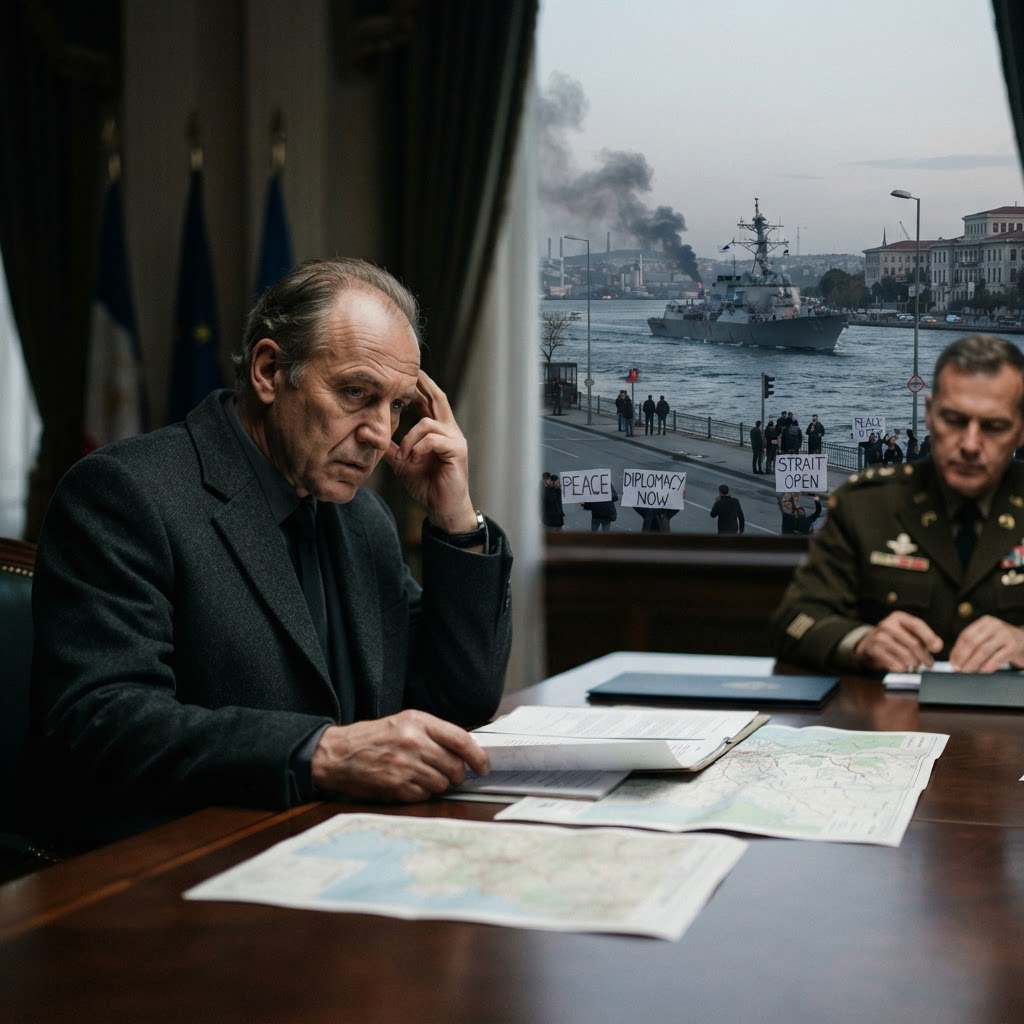
A World of Fractured Battlegrounds and High-Stakes Diplomacy
In mid-November 2026, the international community finds itself contending with converging security, economic, and ecological pressures. From the turbulent maritime bottlenecks of the Persian Gulf to fraught environmental negotiations in the eastern Mediterranean, multilateral institutions are confronting profound limits in resolving protracted conflicts. As major powers recalibrate alliances and diplomatic engagements, regional flashpoints continue to strain global energy markets, humanitarian resources, and defense frameworks.
The Strait of Hormuz on the Brink
Nowhere is the precarious state of global stability more visible than in the Persian Gulf. Following months of spiraling tensions ignited by strikes involving Israeli, American, and Iranian forces earlier in the year, maritime commerce through the Strait of Hormuz has slowed to a virtual standstill. The waterway, historically responsible for carrying approximately one-fifth of the world’s petroleum, remains plagued by hostile interdictions, drone launches, and asymmetric attacks on civilian and naval shipping.
In response to mounting hazards, the United Nations Security Council convened an urgent meeting at the behest of regional partners, including Bahrain, to assess the immediate threat to commercial navigation and regional security. Concurrently, regional actors are bolstering collective defense mechanisms. Gulf Cooperation Council members recently resolved to establish a unified forward military command center in Kuwait to coordinate responses to escalating ballistic and drone threats targeting energy infrastructure across the Arabian Peninsula. Despite these defensive preparations, diplomatic avenues remain fraught, with divisions among Western leaders regarding whether to pursue economic strangulation or broader military containment toward Tehran.
Humanitarian Costs Mount Across Gaza and the Levant
The protracted violence across the Middle East continues to exact a devastating toll on civilian populations. In the Gaza Strip, an already dire situation has deteriorated into an acute winter catastrophe. Humanitarian agencies have issued emergency appeals for basic shelter supplies, fuel, and medical necessities as seasonal storms and cold weather imperil hundreds of thousands living in makeshift displacements.
The physical hazards confronting civilians were starkly reinforced this week following fresh strikes that damaged medical facilities in southern Gaza, including Khan Younis’s Nasser Hospital, resulting in multiple fatalities and severely impairing critical trauma departments. Meanwhile, tensions along the Lebanon frontier continue to disrupt the United Nations Interim Force in Lebanon (UNIFIL), whose operational mandate faces systemic ambiguity ahead of its year-end review. Although regional mediators from Egypt, Turkey, and Qatar continue to press for the complete implementation of phased ceasefire commitments and humanitarian access, persistent cross-border incidents maintain a high baseline of volatility.
Incremental Progress in Eastern European Negotiations
Amid widespread deadlock in the Middle East, the diplomatic theater surrounding Eastern Europe witnessed modest, albeit significant, tactical progress. In Abu Dhabi, United States-mediated trilateral consultations involving Ukrainian and Russian delegations culminated in an in-principle agreement for a comprehensive prisoner-of-war exchange. Representing one of the largest humanitarian accords negotiated since direct dialogue stalled, the swap promises the release of over a thousand personnel from each side.
However, broader political settlement remains elusive. Key stakeholders across Europe have reiterated that any comprehensive continental security architecture must involve direct European participation, rejecting bilateral attempts to demarcate Ukrainian territory or impose unilateral security caps. While negotiators brief leadership in Moscow, Kyiv, and Western capitals, military support frameworks, such as the European Union’s dedicated assistance mission, have secured mandate extensions through 2028, ensuring long-term logistical reinforcement while durable peace mechanisms remain unformulated.
Finance and Technology Clashes at COP31
Simultaneously, the geopolitical divide has surfaced with equal intensity at the COP31 climate summit in Antalya, Türkiye. Negotiators have become embroiled in fierce debates regarding the scale, governance, and equity of adaptation funding. Developing economies, disproportionately affected by acute ecological disruptions, have renewed demands for wealthy historical polluters and major energy producers to significantly augment contributions.
United Nations Secretary-General António Guterres cautioned delegates that even ambitious proposals to triple current adaptation pledges would satisfy less than one-third of the capital required by vulnerable nations facing existential climate shocks. In an effort to address operational bottlenecks, multilateral agencies introduced an innovative $3 billion pre-disaster risk financing platform designed to disburse liquidity to vulnerable communities prior to extreme weather events. Yet debates over emissions targets, fossil fuel phase-outs, and emerging risks—such as the massive energy footprint and information dynamics of artificial intelligence—continue to reflect a profound gulf between multilateral rhetoric and fiscal commitment.
A Fragmented Order Navigates Competing Pressures
From the contested sea lanes of the Middle East to negotiating chambers in Abu Dhabi and Antalya, contemporary world affairs demonstrate the systemic difficulty of maintaining multilateral stability under acute regional friction. While localized breakthroughs, such as high-volume humanitarian swaps, illustrate that focused diplomacy can deliver targeted results, systemic crises—from shipping security to climate adaptation—require structural consensus that remains elusive in an increasingly fragmented international landscape.
Recommended for you
Similar to “World Affairs”
Fractured Frontlines and Strained Diplomacy: The Shifting Architecture of Global Security
Escalating regional clashes in Eastern Europe and the Middle East, coupled with mounting climate shocks, are testing the resilience of international diplomatic frameworks and humanitarian capacity.
Global Diplomacy at a Crossroads: High-Stakes Summits, Escalating Middle East Tensions, and Climate Reckonings
As world powers prepare for rare trilateral leadership talks amid continuing regional conflicts in Eastern Europe and the Middle East, international negotiators face mounting geopolitical strain and fractured multilateral consensus.
Diplomacy, Climate Standoffs, and Health Crises: Global Order Tested on Multiple Fronts
High-stakes peace negotiations in Abu Dhabi secure a breakthrough prisoner exchange amidst deep divisions, while international leaders confront urgent stalemates at COP31 and an escalating public health emergency in Central Africa.