Diplomatic Deadlocks and Rising Brinkmanship: Global Flashpoints Converge on the World Stage
Escalating maritime and military skirmishes across the Persian Gulf, high-stakes arms control diplomacy in Asia, and contentious multilateral negotiations over autonomous weapons highlight a turbulent week in international relations.
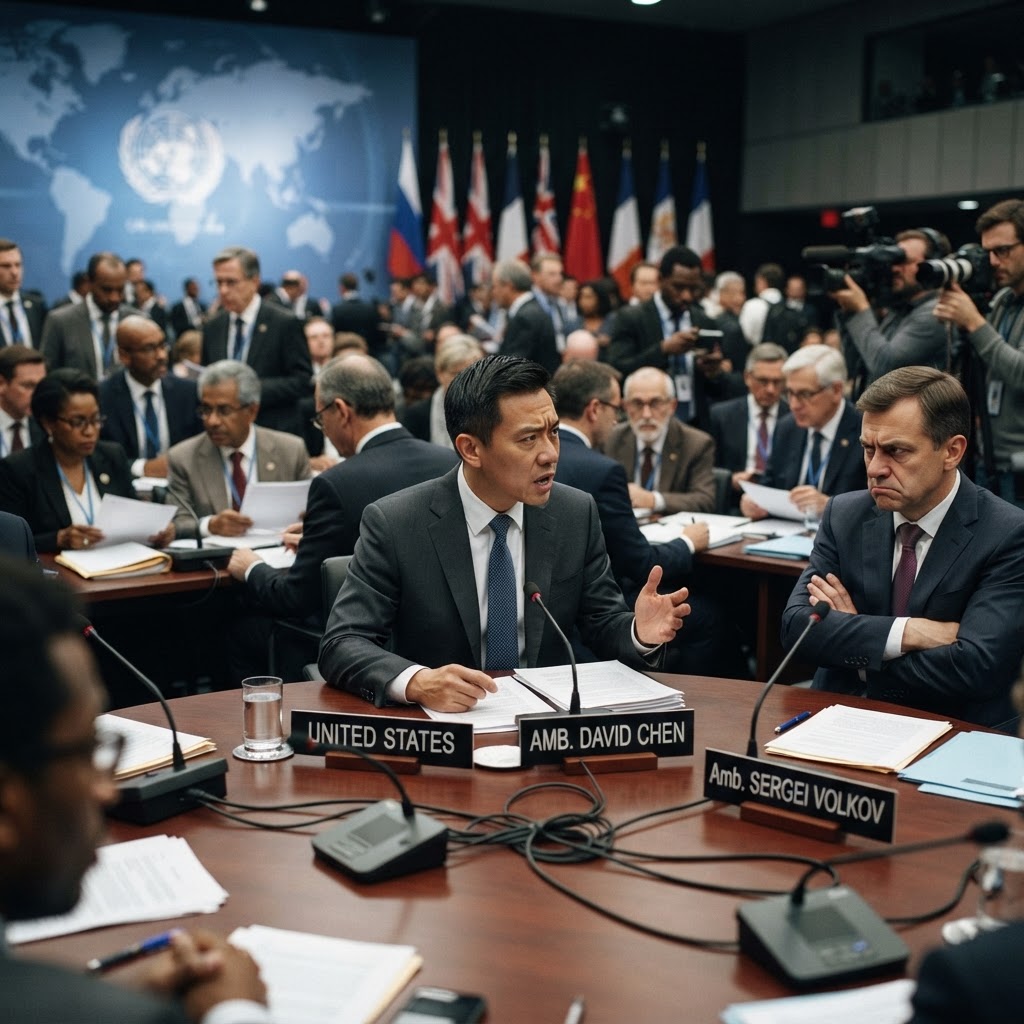
Escalation in the Gulf and Regional Military Frictions
International security architectures face severe strain as low-intensity confrontations continue to flare across the Middle East. Tensions in the Persian Gulf reached a critical threshold this week following reported drone strikes targeting an American military installation's radar infrastructure in Bahrain, claimed by Iran's Islamic Revolutionary Guard Corps and prompting sharp diplomatic rebukes from regional neighbors including the United Arab Emirates. Maritime trade corridors remain under unprecedented stress, with access through the Strait of Hormuz severely disrupted and attacks on commercial vessels mounting. In response to the growing vulnerability of vital shipping lanes, the United Nations Security Council convened an emergency session to address the destabilizing consequences for international navigation and regional security.
Simultaneously, military operations persist across southern Gaza, where targeted strikes resulted in the death of senior militant figures, accompanied by continuing airstrikes that drew international concern over collateral infrastructure damage and humanitarian costs. In Israel's domestic sphere, protracted attempts to resolve governance stalemates between political factions led by Benjamin Netanyahu and Gadi Eisenkot continue without a clear resolution, complicated by divergent strategies over military postures and the management of wider regional adversaries. Meanwhile, neighboring Gulf Cooperation Council members have weighed deeper collective defense initiatives, including plans for unified military command posts to manage the prolonged shadow conflict.
High-Stakes Superpower Diplomacy Across Asia
Against this volatile backdrop, global attention shifts toward multilateral engagements in Asia, anchored by the Asia-Pacific Economic Cooperation summit. Diplomatic channels are preparing for rare direct engagements between the United States, China, and Russia. Central to the upcoming discussions is the fraying architecture of international arms control, underscored by the lapse of bilateral strategic nuclear pacts and Washington's push to draw Beijing into trilateral caps—an initiative China has repeatedly rebuffed, citing its comparatively smaller nuclear stockpile.
The scheduled meetings also occur amid broader geopolitical frictions, including trade negotiations and diplomatic tensions fueled by recent espionage allegations and security fallout in the technology sector. In Southeast Asia, parallel regional talks have reinforced the delicate balance between international intervention and regional sovereignty. High-level delegations attending the ASEAN-UN summits focused renewed attention on the deepening humanitarian crisis and civil conflict in Myanmar, urging collective adherence to non-escalation frameworks as armed confrontations along Myanmar's border zones maintain internal instability.
The Fight to Regulate Autonomous Weapons
In Europe, the future of military engagement took center stage in Geneva, where envoys gathered under the auspices of the Convention on Certain Conventional Weapons to confront the proliferation of lethal autonomous weapons systems. Often characterized as autonomous combat drones and algorithmic target-acquisition tools, these systems have outpaced existing international humanitarian law.
A coalition of nations—spearheaded by Austria, Belgium, Brazil, Ireland, Mexico, New Zealand, and Panama—has formally petitioned for the initiation of legally binding negotiations to restrict or prohibit weapons capable of selecting and engaging targets without meaningful human oversight. While supported broadly by human rights advocates and international legal bodies warning against the ethical abyss of machine-directed combat, the push encounters persistent hesitation from major military powers investing heavily in automated defense technologies. The conference represents a pivotal litmus test for global arms control, reflecting whether institutional multilateralism can maintain control over increasingly autonomous battlefields.
Recommended for you
Similar to “World Affairs”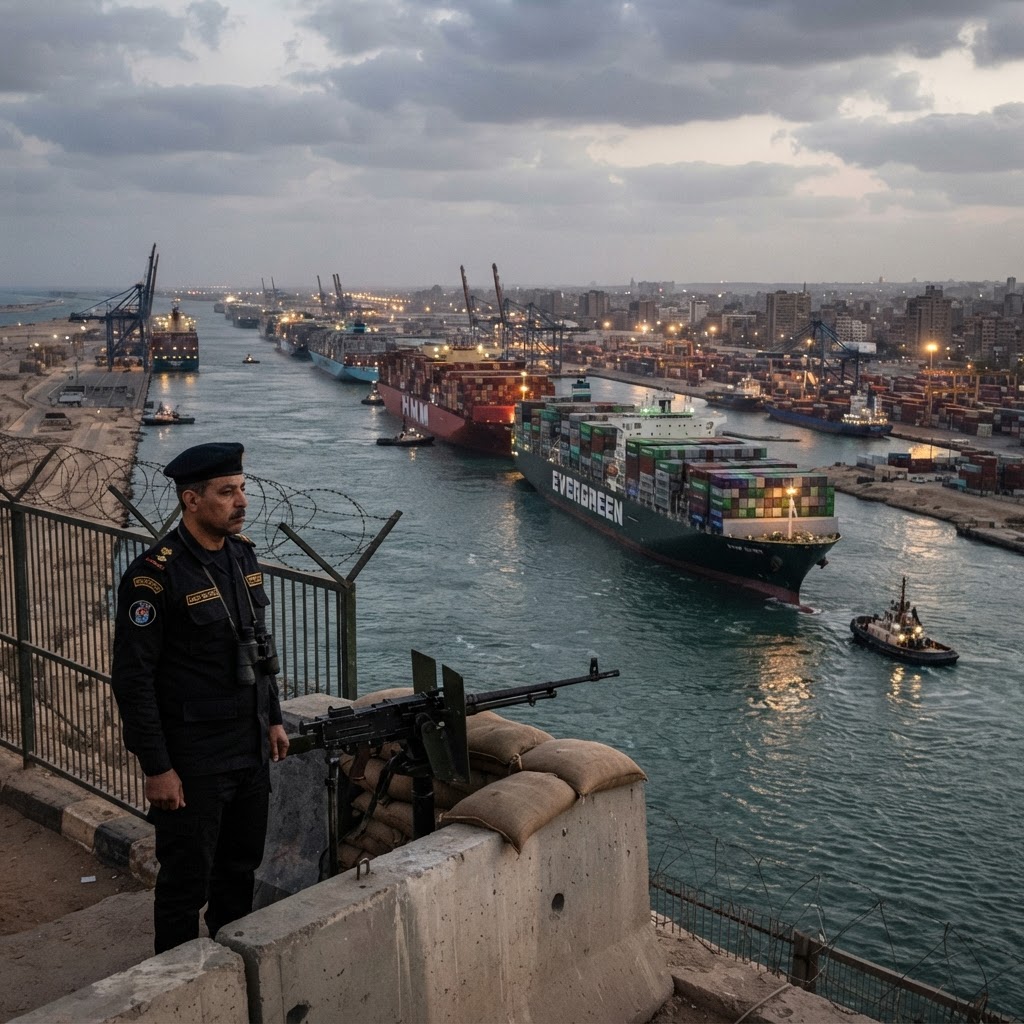
Diplomatic Fractures and Chokepoints: Global Tensions Reshape Trade and Regional Security
Recent shifts across the international stage—spanning delicate maritime negotiations in the Persian Gulf, controversial energy deals, and ongoing legal battles—reveal an increasingly polarized global order. As multilateral frameworks face strain, nations are navigating high-stakes geopolitical brinkmanship and economic recalibration.
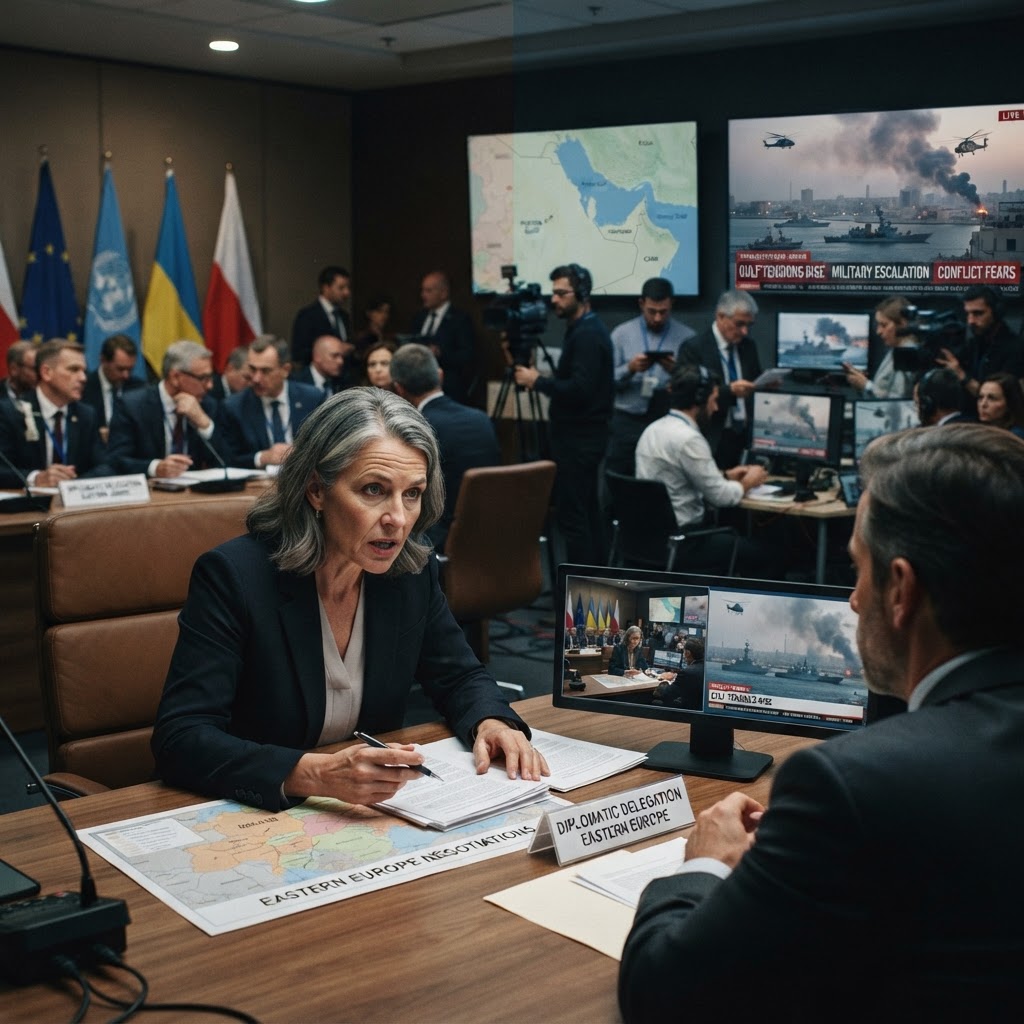
Fragile Peace Diplomacy in Eastern Europe Collides with Rising Escalation in the Gulf
While high-stakes diplomatic negotiations over the war in Ukraine face deadlock over territorial sovereignty, escalating maritime clashes and strategic strikes across the Persian Gulf threaten to spark a broader regional conflict.
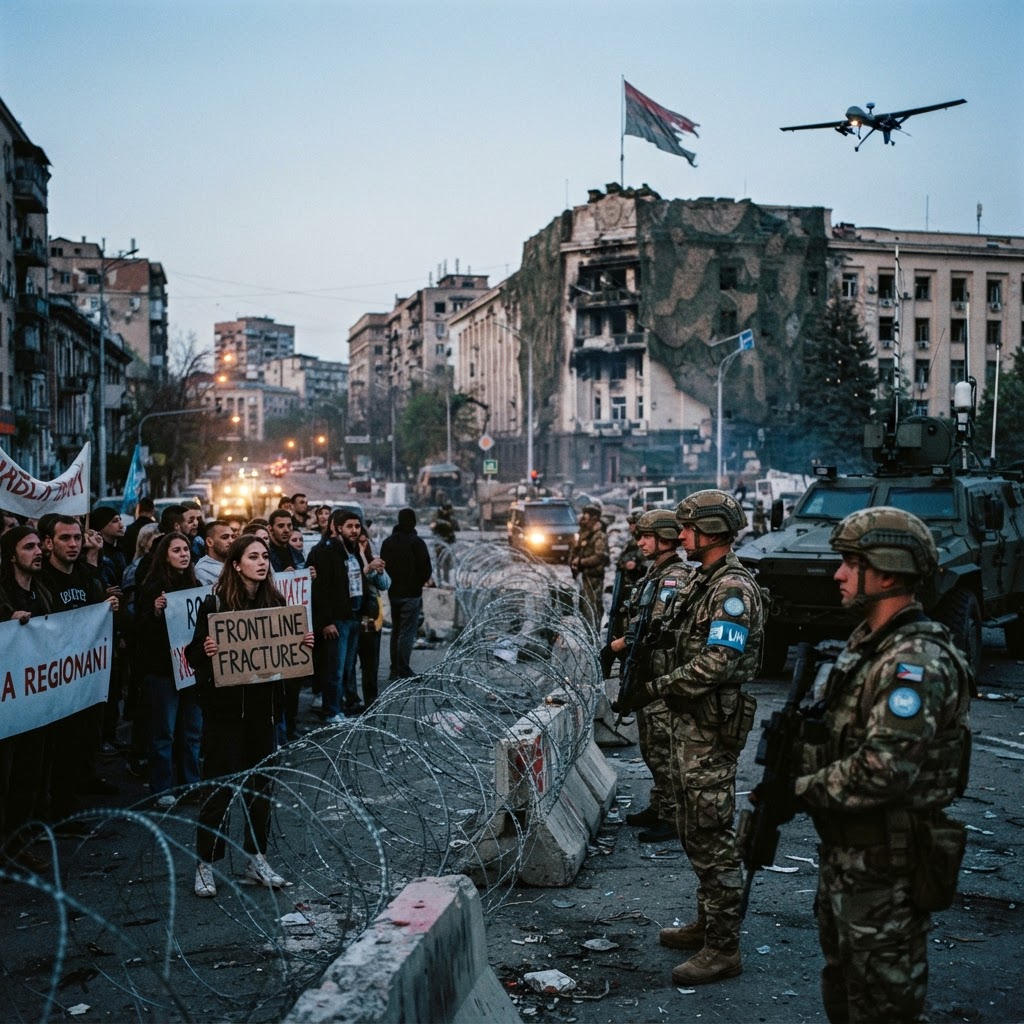
Global Flashpoints Intensify: Shifting Frontlines, Technological Brinkmanship, and Internal Fractures
Escalating cross-border strikes in Eastern Europe, advanced autonomous weapons testing in East Asia, and domestic unrest across Western democracies highlight a fractured international order navigating high geopolitical friction.